A low carb diet for weight loss works mainly by helping you eat fewer calories, often without counting them. In head-to-head trials it takes off about as much weight as other well-planned diets, with average gaps near 1 kg (about 2 pounds) after a year or two.
Key takeaways
- Low carb usually means more than 50 and up to 150 grams of carbs a day; keto is 50 grams or less. That is the range most trials in a 2022 Cochrane review tested (42 of 61).
- In that review, low carb beat balanced diets by less than 1 kg (about 2 pounds) over one to two years.
- The quick drop in the first few days is partly water. Fat loss still depends on eating fewer calories than you burn.
- Versions built on vegetables, nuts, seeds and olive oil look better for heart health than ones heavy in animal fat.
- See a doctor first if you take diabetes or blood pressure medicine, are pregnant or breastfeeding, or have kidney disease or a past eating disorder.
What counts as a low carb diet?
There is no single definition. A 2022 Cochrane review, which pooled 61 diet trials, counts grams. A nutrition report from the American Diabetes Association (ADA) counts the share of calories from carbs.
| Level | Cochrane review | ADA report | ADA range on 2,000 calories |
|---|---|---|---|
| Very low carb | 50 g a day or less | Under 26% of calories | Under about 130 g |
| Low carb | More than 50 g, up to 150 g a day | 26% to 45% of calories | About 130 g to 225 g |
So 140 grams a day is low carb under both. The ADA’s very low tier is much wider than keto (usually 20 to 50 grams).
How low carb differs from keto
A Harvard review of the ketogenic diet describes keto as under 50 grams of carbs a day, with 70% to 80% of calories from fat. Atkins is very low carb and high in protein; Paleo, South Beach and Dukan are high in protein but moderate in fat. For a side-by-side look, see low carb vs keto: which is better for weight loss, or our keto diet guide.
How a low carb diet for weight loss works
You eat fewer calories, often without trying
Cutting carbs removes easy-to-overeat foods like pastries, chips, sugary drinks and white bread. In DIETFITS, a 12-month Stanford trial of 609 adults, neither diet group got a calorie target. Both the low carb and low fat groups still reported eating 500 to 600 fewer calories a day, and both lost weight. Estimated calories burned did not differ between the groups, which points to eating less, not a metabolic edge.
The early drop is partly water
When carbs fall sharply, the body uses up its stored glucose over a few days. Very low carb eating can also cause diuresis, meaning you pass more urine and lose fluid. So the early drop is not all fat.
Low carb vs low fat and other diets: what the research shows
Overall, low carb works but is not clearly better than other well-followed diets. One older two-year trial, DIRECT, found an edge over low fat.
| Evidence | Who and how long | What happened |
|---|---|---|
| Cochrane review (2022) | 61 trials, 6,925 adults with overweight or obesity | Without diabetes, low carb lost about 1.1 kg more at 3 to 8.5 months and 0.9 kg more at 1 to 2 years than balanced diets (45% to 65% carbs): probably little to no difference. |
| DIETFITS, Stanford (2018) | 609 adults without diabetes, 12 months | Healthy low carb: −6.0 kg (about 13 pounds). Healthy low fat: −5.3 kg (about 12 pounds). Not a statistically significant difference. |
| DIRECT trial, in Harvard’s low carb summary | Adults, 2 years | In this one trial, low carb and Mediterranean diets beat low fat for weight loss and maintenance. |
| Analysis in the medical journal BMJ (2020) | 121 trials, 21,942 adults | At 6 months, low carb took off about 4.6 kg and low fat about 4.4 kg more than a usual diet. By 12 months, losses had shrunk on every pattern. |
In the Stanford trial, both groups were told to eat plenty of vegetables, cut added sugars and refined flours, and favor whole foods cooked at home. Those basics may matter more than the carb-fat split. The Mediterranean diet, which keeps grains and beans, also did well in DIRECT. Our diet plans section covers more options.
If you have type 2 diabetes or prediabetes
The ADA says cutting overall carbs has the most evidence for improving blood sugar in diabetes. In the Cochrane review, people with type 2 diabetes lost about 1.3 kg more on low carb at 3 to 6 months, but only 0.3 kg more at 1 to 2 years. Plan any big change with your care team.
What to eat on a low carb diet
The ADA report describes a typical low carb pattern: vegetables low in carbs, such as salad greens, broccoli and cauliflower; fat from animal foods, oils, butter and avocado; and protein from meat, poultry, fish, eggs, cheese, nuts and seeds. It avoids pasta, rice, potatoes, bread and sweets.
The table below is our healthier take on that pattern: more plant fats, fish and poultry, plus some fruit, vegetables and whole grains, as Harvard advises.
| Build meals on | Eat in measured portions | Limit |
|---|---|---|
| Leafy greens, broccoli, cauliflower, zucchini, peppers, mushrooms, cucumber, tomatoes | Berries and other fruit | Sugary drinks and fruit juice |
| Fish, chicken, eggs, tofu, plain Greek yogurt, cheese | Beans, lentils and chickpeas | Candy, pastries, cookies and ice cream |
| Olive oil, avocado, nuts and seeds | Whole grains such as quinoa, oats and brown rice | White bread, white rice and regular pasta |
| Herbs, spices, vinegar and mustard | Starchy vegetables such as sweet potato and corn | Chips, crackers and processed meats |
For snacks, keep eggs, nuts, plain Greek yogurt and low carb vegetables on hand. When you eat out, swap fries, rice or bread for extra vegetables.
Choose plant fats and lean proteins
In long-term studies of more than 80,000 women, low carb diets rich in vegetable fat or protein were linked to a 30% lower heart disease risk and about a 20% lower type 2 diabetes risk than high carb, low fat diets. Versions high in animal fat and protein showed no such benefit.
In the BMJ analysis, low carb lowered LDL (“bad”) cholesterol less than low fat did. A pooled analysis of 13 keto trials found LDL rose more on keto than on low fat. Ask your doctor for a cholesterol test a few months in.
Labels and drinks
“Net carbs” is an unregulated marketing term, and some sugar alcohols in “low carb” bars can still add calories and raise blood sugar. Drink water, sparkling water, or unsweetened coffee or tea instead of sugary drinks, which are linked to type 2 diabetes, weight gain and heart disease.
Sample low carb day (about 90 grams of carbs)
This sample day has about 1,500 calories, 88 grams of carbs, 28 grams of fiber and 115 grams of protein. These are our estimates; brands and portions change them.
| Meal | What to eat | Carbs (approx.) |
|---|---|---|
| Breakfast | 2 eggs scrambled with 1 cup spinach and ½ cup mushrooms in 1 tsp olive oil; ½ cup raspberries | 10 g |
| Lunch | Salad of 2 cups romaine, 4 oz grilled chicken breast, ½ small avocado, 5 cherry tomatoes, ½ cup cucumber and ½ cup chickpeas, dressed with 1 tbsp olive oil and vinegar | 37 g |
| Snack | 7-oz container plain low fat Greek yogurt with ½ oz walnuts | 10 g |
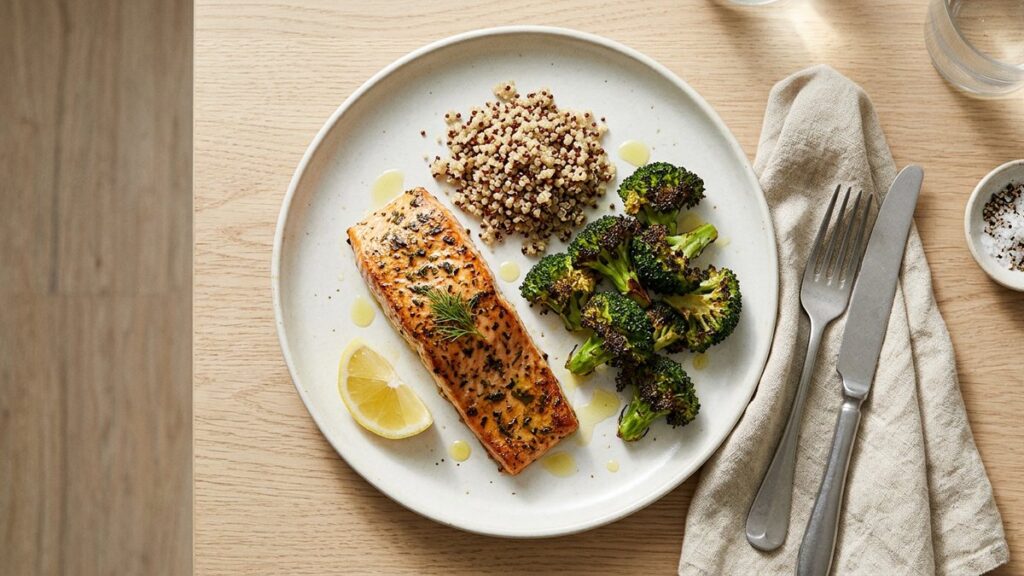
| Dinner | 4 oz baked salmon, 1 cup cooked broccoli and ½ cup cooked quinoa, with 1 tsp olive oil | 31 g |
| Total | About 1,500 calories | 88 g |
To go lower: skip the chickpeas and quinoa to reach about 45 grams of carbs, in the very low carb range. That also removes about 245 calories and 9 grams of fiber. To stay near 1,500 calories, add 2 more ounces of salmon or chicken and 1 tablespoon of olive oil. If you take diabetes or blood pressure medicine, read the safety list below before going this low.
Adjust the calories to you. This day is an example, not a target: 1,500 calories is too low for many men and active adults. Find your number with our guide to how many calories you need to lose weight, or follow our 7-day low carb meal plan.
How to start a low carb diet in 6 steps
- Pick a level. A very low carb start shows fast scale results, but in the analysis of 13 keto trials, people stuck to it less well over time.
- Cut the easy targets first. Drop sugary drinks, sweets, chips and white bread before you touch fruit, beans or whole grains.
- Build each plate the same way. Start with a palm-size portion of protein, fill half the plate with non-starchy vegetables, then add olive oil or avocado.
- If you start very low, add carbs back slowly. In the Stanford trial, the low carb group aimed for 20 grams of digestible carbs a day for the first 8 weeks. Then they raised daily carbs by 5 to 15 grams each week to the lowest level they could keep. By 12 months they averaged about 132 grams, or 30% of calories (48% in the low fat group), and still lost weight.
- Keep moving. No special workout is needed; the Stanford trial simply encouraged people to follow standard physical activity advice. Fatigue can show up in the first days to weeks of very low carb eating, so go easier on hard sessions until it passes.
- Track for a few weeks. Watch your weight trend, hunger and energy. If progress stops, try these fixes for a low carb weight loss stall.
Low carb diet side effects and how to manage them
The Harvard keto review lists possible short-term symptoms of cutting carbs very low: hunger, fatigue, low mood, irritability, constipation, headaches and brain fog. They may last days to weeks. Some people call this the “keto flu.”
- Drink enough fluids. Early fluid loss can leave you dehydrated.
- Eat high-fiber foods. Vegetables, berries, nuts and seeds ease constipation.
- Keep variety. A narrow food list can leave gaps in fiber, B vitamins, iron, magnesium and zinc.
The same review says long-term keto may raise the risk of kidney stones and bone loss, and may raise uric acid, a risk factor for gout.
Who should avoid a low carb diet or see a doctor first
This guide is for adults, not children or teens. Check with a doctor or dietitian first if any of these apply:
- You take insulin or another medicine that can cause low blood sugar, such as a sulfonylurea (glipizide, glyburide). The ADA warns that very low carb eating can lower blood sugar quickly, so insulin and these medicines may need to come down.
- You take an SGLT2 inhibitor, a diabetes pill such as empagliflozin (Jardiance) or dapagliflozin (Farxiga). MedlinePlus says to tell your doctor if you follow a ketogenic diet on empagliflozin, and to get care right away for signs of ketoacidosis (a dangerous acid buildup in the blood): nausea, vomiting, stomach pain, tiredness or trouble breathing.
- You take blood pressure medicine or a diuretic (water pill). You lose fluid early on, and short-term keto studies show blood pressure can fall. Ask whether doses or monitoring should change.
- You have type 1 diabetes. Ketoacidosis occurs most often in type 1 diabetes, so any carb change needs your care team.
- You are pregnant or breastfeeding, or have chronic kidney disease, liver disease or a history of disordered eating. The ADA says very low carb plans need more research in pregnancy, kidney disease and disordered eating; the Harvard keto review also flags breastfeeding and liver disease.
- You have high LDL cholesterol, heart disease, gout or kidney stones. Ask how to adjust the plan and when to recheck blood work.
Frequently asked questions
How many carbs a day should I eat to lose weight?
There is no single number. The Cochrane review’s low carb range is more than 50 and up to 150 grams a day; the ADA’s runs to about 225 grams on 2,000 calories. Cut sugar and refined grains first, then settle on the lowest level you can keep.
How much weight can you lose in a month on a low carb diet?
Expect a quicker drop at first, partly from water. Over the first 6 months as a whole, low carb diets in the BMJ analysis took off about 4.6 kg (10 pounds) more than a usual diet. That averages less than 1 kg (about 2 pounds) a month. Results vary widely; in the Stanford trial, a year’s weight change ranged from losing about 30 kg (66 pounds) to gaining about 10 kg (22 pounds).
Is low carb better than low fat for weight loss?
Not clearly. In the Stanford trial, the low carb and low fat groups ended the year 0.7 kg (about 1.5 pounds) apart, a gap that was not statistically significant. The BMJ analysis also found similar losses at 6 months.
Can you eat fruit on a low carb diet?
Yes, in measured portions. Berries are lower in digestible carbs than most fruit. Half a cup of raspberries has about 7 grams of carbs, 4 of them fiber, by our estimate.
Can you drink alcohol on a low carb diet?
Some keto plans allow a little hard liquor or low carb wine and beer; most restrict regular beer, wine and sweet mixers. With diabetes or prediabetes, the ADA advises at most one drink a day for women and two for men. If you use insulin or a sulfonylurea, alcohol can cause delayed low blood sugar, so check your levels after drinking.
Sources
- Low-carbohydrate versus balanced-carbohydrate diets for reducing weight and cardiovascular risk. Cochrane Database of Systematic Reviews, 2022.
- Effect of low-fat vs low-carbohydrate diet on 12-month weight loss in overweight adults (DIETFITS). JAMA, 2018.
- Comparison of dietary macronutrient patterns of 14 popular named dietary programmes for weight and cardiovascular risk factor reduction. BMJ, 2020.
- Nutrition therapy for adults with diabetes or prediabetes: a consensus report. Diabetes Care, 2019.
- Low-carbohydrate diets. Harvard T.H. Chan School of Public Health.
- Diet review: ketogenic diet for weight loss. Harvard T.H. Chan School of Public Health.
- Empagliflozin. MedlinePlus, U.S. National Library of Medicine.