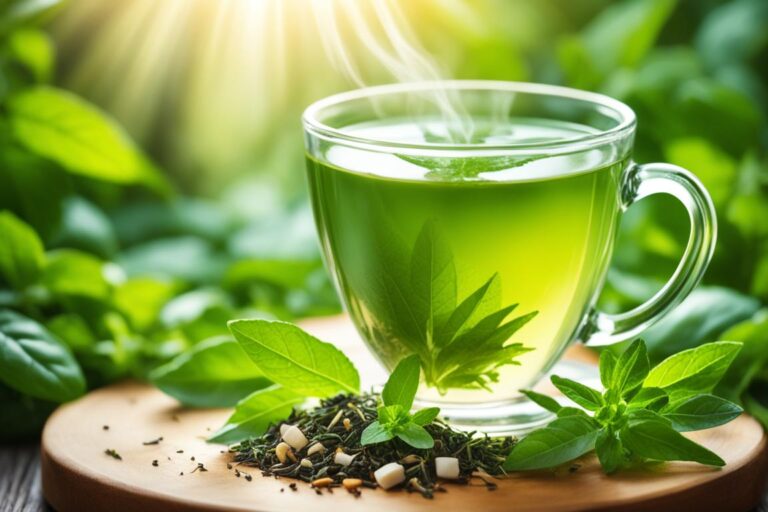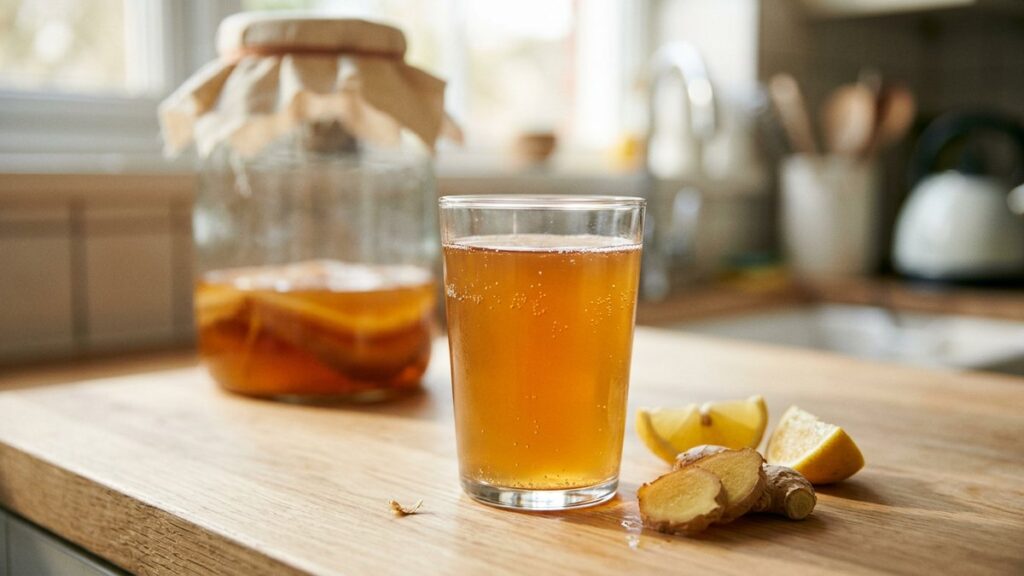
Kombucha for weight loss has little evidence behind it. In a 10-week randomized trial, adults on a reduced-calorie diet lost about the same amount of weight whether or not they also drank kombucha every day. Kombucha can still help indirectly if it replaces soda, juice or alcohol, but only if you choose a low-sugar bottle.
Key takeaways
- We found no human study showing that kombucha itself causes weight loss. In the best trial so far, it did not add to the weight lost on a calorie-reduced diet.
- Claims that kombucha “burns fat” or “mimics fasting” come from a worm study, not people.
- Sugar varies a lot. USDA’s generic entry lists about 40 calories and 10 grams of sugar in 8 ounces, compared with about 104 calories and 25 grams in regular cola.
- Kombucha contains live microbes, some caffeine and a little alcohol, which has topped 1% in some tested batches.
- Skip it or ask your doctor first if you are pregnant, avoid alcohol, have a weakened immune system or are thinking of giving it to a child.
What is kombucha?
Kombucha is a fizzy, slightly sour drink made by fermenting sweetened tea with a culture of bacteria and yeast, often called a SCOBY. The University of Georgia Extension explains that the culture feeds on the sugar and makes acids and trace amounts of alcohol, which give kombucha its tang.
In one product tested in a 2023 clinical study, lactic acid bacteria, acetic acid bacteria and yeast were each present at roughly a million live cells per milliliter, which is why kombucha is sold as a probiotic drink. Our guide to probiotics for weight loss covers what research says about gut bacteria and weight.
Does kombucha help with weight loss? What the research shows
Very few studies have tested kombucha in people. Here is what exists.
A 10-week trial found no extra weight loss
A randomized controlled trial published in Nutrients in 2024 enrolled 75 adults with excess weight. Only the 59 who finished were analyzed (29 on diet alone, 30 on diet plus kombucha); dropouts were left out. Everyone ate 500 fewer calories than they needed each day, and the kombucha group also drank 200 mL (about 7 ounces) of green tea kombucha daily.
- The diet-only group lost an average of 2.29 kg (about 5 pounds).
- The kombucha group lost an average of 3.02 kg (about 6.7 pounds).
- The difference between groups was not statistically significant, so it could be due to chance.
- Body scans showed similar fat loss in both groups, including around the belly.
The authors concluded that kombucha did not boost weight loss. Changes they saw in inflammation markers and mouth bacteria are early findings that need larger trials.
The trial also tested a common claim: green tea kombucha is often said to speed up metabolism, yet it added no weight loss here. If tea itself interests you, see our guides to weight loss tea and green tea extract.
The “fasting-like” fat study was in worms
Claims that kombucha mimics fasting and reduces fat trace back to a study in PLOS Genetics using C. elegans, a tiny worm often used in lab research. Worms fed only kombucha microbes stored less fat, and their gut genes shifted toward burning fat.
The researchers themselves noted that kombucha’s health claims have not been rigorously tested, and a worm living only on kombucha microbes tells us little about a person drinking one bottle a day.
A tiny blood sugar study: early and not about weight
In the 2023 pilot study, 12 adults with type 2 diabetes took part, but only 7 completed both phases and were included in the blood sugar analysis. Each drank 240 mL (8 ounces) of kombucha or a placebo with dinner daily for four weeks, then switched after a break.
In those 7 people, average fasting blood sugar fell from 164 to 116 mg/dL on kombucha and from 162 to 141 mg/dL on placebo. Compared directly at four weeks, kombucha and placebo did not differ significantly. The study did not measure weight.
| Claim | Type of evidence | What it shows |
|---|---|---|
| Kombucha helps you lose weight | One 10-week human trial, 59 people analyzed | No extra weight loss compared with diet alone |
| Kombucha burns fat or mimics fasting | Worm study | Less stored fat in worms fed only kombucha microbes |
| Kombucha lowers blood sugar | Pilot study, 7 people analyzed | Blood sugar fell on kombucha, but not significantly more than on placebo |
| Green tea kombucha boosts metabolism | Same 10-week trial | No added weight loss |
Sugar and calories in kombucha
Sugar is a required ingredient. The microbes eat part of it, but some always remains, and flavored versions may add juice or sugar after brewing.
| Drink (8 fluid ounces) | Calories | Sugar | Caffeine |
|---|---|---|---|
| Unflavored kombucha (CSU Extension) | About 30 | 2 to 3 g | Not listed |
| Kombucha, USDA generic entry | About 40 | About 10 g | About 27 mg |
| Regular cola (USDA) | About 104 | About 25 g | About 22 mg |
| Brewed black tea (USDA) | About 2 | 0 g | About 48 mg |
We calculated the USDA figures for 8 ounces from USDA FoodData Central values per 100 grams. USDA builds its generic kombucha entry from a recipe of tea and sugar, so real bottles vary. The unflavored figure comes from Colorado State University (CSU) Extension. A 16-ounce bottle has twice these amounts.
Even at the higher USDA estimate, kombucha has well under half the calories and sugar of regular cola. That is its real role in a weight loss plan: a lower-sugar swap, not a fat burner.
The Dietary Guidelines for Americans, 2025–2030 advise avoiding sugar-sweetened drinks such as sodas, fruit drinks and energy drinks. They say no amount of added sugar is recommended and suggest no more than 10 grams of added sugars in a single meal, a limit one sweet kombucha can use up. They also suggest limiting low-calorie sweeteners, which some “low sugar” kombuchas use.
Kombucha label checklist
| Check | What to look for | Why it matters |
|---|---|---|
| Added sugars | The lowest number you can find; ideally well under 10 grams | Added sugar adds calories with little nutrition |
| Servings per container | Whether the bottle counts as one serving or two | The calories and sugar listed may cover only half the bottle |
| Sweeteners | Stevia, erythritol or other low-calorie sweeteners | The Dietary Guidelines suggest limiting these too |
| Alcohol statement | Any alcohol content or government warning on the label | CSU Extension notes that kombucha can exceed 0.5% alcohol, the limit for non-alcoholic drinks |
How to drink kombucha for weight loss
If you enjoy kombucha, it can fit into a weight loss plan as a drink swap.
- Replace a higher-calorie drink. Swapping a regular soda, sweet tea or cocktail for a low-sugar kombucha cuts calories and added sugar.
- Start small. CSU Extension suggests no more than 4 ounces a day at first, with plenty of water. The 10-week trial used about 7 ounces, and there is no evidence that more helps.
- Drink it with a meal. Both human trials had people drink it with food, at lunch in one and with dinner in the other.
- Count it. Log kombucha like any other drink if you track calories or carbs.
- Do not use it as a meal replacement. It has almost no protein or fiber, so it will not keep you full.
- Mind the caffeine. It varies by brand. USDA’s generic entry estimates about 27 mg in 8 ounces, a little over half the amount in brewed black tea, so drink it earlier if caffeine affects your sleep. Here is how sleep and weight loss are linked.
- Keep water as your main drink. Plain or sparkling water has no calories. For more ideas, see our guide to what to drink for a flatter stomach.
Kombucha safety: who should be careful
The University of Georgia Extension says kombucha is generally safe for most people, but some should skip it or ask a doctor first:
- Pregnant or breastfeeding women. The Dietary Guidelines say pregnant women should avoid alcohol completely, and kombucha can contain alcohol and caffeine. The University of Georgia Extension says kombucha may not be suitable during pregnancy. If you are breastfeeding, ask your doctor or midwife.
- People who avoid alcohol. The Dietary Guidelines also say people recovering from alcohol use disorder, people who cannot control how much they drink and people taking medicines that interact with alcohol should avoid it completely.
- Children. The University of Georgia Extension says kombucha may not be suitable for children. It contains caffeine and can contain alcohol.
- People with a weakened immune system. Kombucha is full of live bacteria and yeast, and the same guide says it may not suit people with compromised immune systems.
- People with serious health conditions. A 1995 CDC report (archived copy) said the risks are unknown for people with existing health problems.
Alcohol content
Fermentation makes alcohol, and longer fermentation makes more of it, according to the University of Georgia Extension. The kombucha in the 2023 blood sugar study contained 1.5% alcohol, and homemade teas tested in the CDC investigation ranged from 0.7% to 1.3%. CSU Extension notes that under some conditions kombucha can go above 0.5%, the limit for non-alcoholic drinks.
Side effects
Side effects reported in studies are mostly mild. In the 2023 pilot study, one person reported bloating. Kombucha is also acidic, with a pH of 3.52 for the study drink, and CSU Extension notes that bad reactions have been linked to unusually high acid levels. If kombucha upsets your stomach, cut back or stop.
Serious problems are rare but documented. In 1995 the CDC (archived copy) investigated two Iowa women who became severely ill with a dangerous buildup of acid in the blood after drinking homemade kombucha daily; one died. Investigators could not prove the tea was the cause. The report said the typical amount, about 4 ounces a day, may not cause problems in healthy people.
Homebrewed kombucha
Making kombucha at home gives you less control over alcohol, acidity and contamination. The University of Georgia Extension says home brewing can be safe with good hygiene, a tested recipe and correct fermentation, but poor sanitation raises the risk of contamination.
If you brew at home:
- Use a tested recipe and keep your hands, tools and work area clean. CSU Extension advises washing your hands well before handling the SCOBY.
- Brew in a glass jar, stainless steel or food-grade plastic vessel, as CSU Extension recommends. The CDC report warns against brewing or storing kombucha in ceramic or lead crystal, which can leach toxic metals into the acidic tea.
- Stick to the recipe’s fermentation time. In the University of Georgia recipe, that is 7 to 10 days.
- If you see fuzzy blue, gray, green, brown or black mold, CSU Extension says to throw out both the SCOBY and the kombucha and wash the vessel well.
- Refrigerate finished kombucha at 40°F or below. The University of Georgia Extension says it keeps up to 30 days, but once you add fruit or other flavors, drink it within 2 days.
- Do not leave flavored bottles capped at room temperature for long. CSU Extension warns that gas can build up until bottles burst.
Diabetes and medications
If you have diabetes, count kombucha’s sugar as part of your carbohydrates. Tell your care team if you drink it daily, especially if you take insulin or other medicines that lower blood sugar.
For more drink and food guides, browse our healthy eating section.
Frequently asked questions
Does kombucha help you lose belly fat?
There is no good evidence that it does. In the 10-week trial, body scans showed that people lost belly fat on the reduced-calorie diet whether or not they drank kombucha. The calorie deficit did the work.
How much kombucha should I drink a day to lose weight?
No amount is proven to cause weight loss. The trial used about 7 ounces a day, and CSU Extension suggests starting with no more than 4. A 1995 CDC report said about 4 ounces a day may not cause problems in healthy people, but risks are unknown for people who drink much more.
When is the best time to drink kombucha for weight loss?
No study has tested whether timing matters, so there is no best time for weight loss. In both human trials, people drank it with a meal. Because kombucha contains some caffeine, earlier in the day may work better if caffeine keeps you awake.
Does kombucha break a fast?
Most kombucha contains sugar and calories, so it breaks a strict fast. If you follow a time-restricted eating plan, drink it during your eating window. Our guide to intermittent fasting results explains how fasting windows work.
Is kombucha better than soda for weight loss?
It can be. By USDA figures, generic kombucha has about 40 calories in 8 ounces, compared with about 104 in regular cola. Flavored brands vary, so read the label, and remember that water, sparkling water and unsweetened tea are still better everyday choices.
Is homemade kombucha safe?
It can be, if you follow a tested recipe with good hygiene, according to the University of Georgia Extension. Brew in glass, not ceramic or lead crystal, stick to the fermentation time, refrigerate the finished drink and throw out any batch with mold. If you are pregnant or have a weakened immune system, the same guide says kombucha may not suit you at all.
Sources
- Fraiz GM, et al. Green Tea Kombucha Impacts Inflammation and Salivary Microbiota in Individuals with Excess Body Weight: A Randomized Controlled Trial (Nutrients, 2024, via PubMed Central)
- DuMez-Kornegay RN, et al. Kombucha Tea-associated microbes remodel host metabolic pathways to suppress lipid accumulation (PLOS Genetics, 2024, via PubMed Central)
- Mendelson C, et al. Kombucha tea as an anti-hyperglycemic agent in humans with diabetes: a randomized controlled pilot investigation (Frontiers in Nutrition, 2023, via PubMed Central)
- USDA FoodData Central, FNDDS: Tea, kombucha (2710509); Soft drink, cola (2710541); Tea, hot, leaf, black (2710488) (U.S. Department of Agriculture)
- Understanding and Making Kombucha (Colorado State University Extension, reviewed October 2025)
- Crafting Kombucha at Home: Frequently Asked Questions (University of Georgia Cooperative Extension and National Center for Home Food Preservation, 2026)
- Unexplained Severe Illness Possibly Associated with Consumption of Kombucha Tea, Iowa, 1995 (CDC, Morbidity and Mortality Weekly Report; archived copy)
- Dietary Guidelines for Americans, 2025–2030 (U.S. Departments of Agriculture and Health and Human Services)