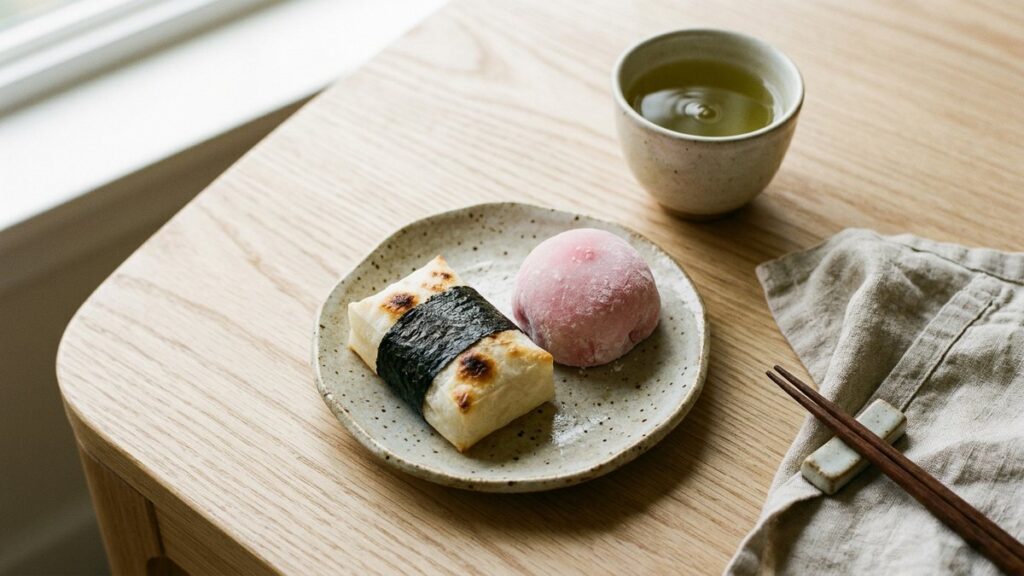
Mochi can fit into a weight-loss diet, but it isn’t a diet food. Small packaged pieces, about 28 to 50 grams each, have roughly 80 to 130 calories, while a full-size daifuku can have roughly 245 to 300. If you’re looking into mochi weight loss, the practical answer is simple: check the label or weigh it, plan for one piece as a treat, and count it in your daily calories.
Key takeaways
- Mochi is a chewy Japanese rice cake made from steamed, pounded glutinous rice.
- Small packaged pieces run about 80 to 130 calories. Full-size daifuku in the USDA database have about 245 to 300 calories and up to 70 grams of carbs.
- Mochi is mainly carbohydrate, with little protein and 0 to 2 grams of fiber per piece, so count it like any other treat.
- Mochi is a choking hazard, especially for older adults. Cut it small and chew well.
- This article is about the food. Mochi Health, the telehealth company, is unrelated.
What is mochi?
Mochi is a chewy Japanese rice cake made by steaming glutinous rice and pounding it into a smooth, sticky dough that is shaped into rounds or rectangles. A regional recipe for millet mochi from Japan’s Ministry of Agriculture, Forestry and Fisheries shows the classic method: soak glutinous rice overnight, steam it, pound it and shape it. The ministry notes that, like regular mochi, the cakes are baked or boiled, then dipped in soy sauce, wrapped in seaweed or sweetened with roasted soybean flour (kinako).
Mochi is a staple of the Japanese New Year holiday and is often eaten in a savory soup called ozoni, CBS News reports.
Common types of mochi
- Plain mochi blocks: shelf-stable or frozen squares that you grill, bake or add to soup.
- Daifuku: soft mochi stuffed with a sweet filling, such as red bean paste. Sizes range from bite-size packaged pieces to large single cakes.
- Mochi ice cream: a thin mochi wrapper around a small ball of ice cream.
- Mochi from sweet rice flour: a quicker home version made with glutinous rice flour (mochiko) and water.
Does glutinous rice contain gluten?
No. “Glutinous” describes the rice’s sticky texture, not gluten. Rice is naturally gluten-free, according to the National Institute of Diabetes and Digestive and Kidney Diseases (NIDDK). Flavored and filled mochi can contain other ingredients, so people with celiac disease should still read the label.
Mochi calories and carbs per piece
Calories depend mostly on size and filling. The figures below come from nutrition labels for specific products in USDA FoodData Central, rounded. Brands vary, so check your package.
| Type | Serving | Calories | Carbs | Sugar |
|---|---|---|---|---|
| Plain mochi | 100 g | 220 to 244 | 50 to 53 g | 0 g |
| Plain mochi block | 1 block (45 to 50 g) | 110 | 24 to 25 g | 0 g |
| Mochi ice cream | 1 piece (28 to 43 g) | 80 to 110 | 13 to 20 g | 9 to 12 g |
| Mini filled mochi (packaged) | 1 piece (30 to 35 g) | 90 to 130 | 19 to 22 g | 10 to 16 g |
| Full-size daifuku | 1 piece (95 to 110 g) | 245 to 300 | 54 to 70 g | 32 to 54 g |
The products behind each row, with their FoodData Central ID numbers:
- Plain mochi: Grainaissance Original Mochi (2027858) and Eden Organic Sweet Brown Rice Mochi (2051819).
- Mochi ice cream: Mt Fuji Mochi Ice Cream (552731) and MY/MO Coffee Mochi Ice Cream with Caramel Center (720756).
- Mini filled mochi: Khong Guan Imperial Mochi, Red Bean (2089237), Royal Family Japanese Mochi (1149113) and Royal Family Peanut Mochi (2061816).
- Full-size daifuku: Daifuku Mochi Mame (396397), Daifuku Rice Cake (396375), Daifuku Red Bean Cake (396377) and Shirakiku White Daifuku Red Bean Cake (2030251).
Size is the big variable. A full-size daifuku weighs about three times as much as a packaged mini piece and has roughly two to three times the calories. If you buy fresh mochi without a label, weigh it: plain mochi has about 2.2 to 2.4 calories per gram, and the sweet filled mochi above runs about 2.5 to 3.7.
What’s inside a typical piece
- Mostly carbohydrate. Plain mochi is about half carbohydrate by weight.
- Little protein. Small pieces have 1 to 2 grams, and full-size daifuku about 4.
- Little fiber. Every product above lists 0 to 2 grams per piece, including the brown-rice plain blocks and the full-size daifuku.
- Low fat in plain mochi. Plain blocks have about 1 gram. Ice cream and peanut versions have about 2.5 to 4 grams.
Is mochi healthy?
Mochi is a traditional food, not a health food. Plain mochi is basically concentrated rice: low in fat and satisfying to chew, but short on protein. Sweet versions add sugar on top.
Fiber is the other gap. The filled mochi and mochi ice cream in the table list 0 to 2 grams of fiber per piece, alongside 13 to 70 grams of carbohydrate. The NIDDK explains that your body turns carbohydrates into glucose, which can raise your blood glucose level, so mochi’s carbs count like those in any other starchy food.
The Dietary Guidelines for Americans, 2025-2030, say added sugars are not recommended. They list rice among the preferred grains when eaten in whole or traditionally prepared forms, but advise limiting refined and packaged grain products. By that yardstick, a plain mochi cake in a bowl of soup is a reasonable occasional choice. A box of sweetened mochi ice cream is dessert.
Claims to ignore
Some websites claim mochi “boosts metabolism,” that its chewiness burns extra calories, or that it’s a low-calorie superfood. We found no good evidence for any of these claims. Mochi supplies energy like any other starch. Weight loss still depends on your overall calorie balance over time.
Mochi weight loss: how to fit it into your diet
You don’t have to give up mochi to lose weight. These steps help:
- Decide on one piece in advance. Put it on a plate, put the box away and eat it slowly. Our guide to mindful eating for weight loss has more ways to enjoy treats without overdoing them.
- Count it accurately. A small packaged piece is about 80 to 130 calories, but a full-size daifuku can be 245 to 300. Check the label, or weigh unlabeled mochi. Our guide to how many calories you need to lose weight helps you set a daily budget.
- Make plain mochi part of a meal. Add one grilled block to a broth with vegetables and chicken, tofu or egg. The protein and vegetables make the meal more filling. Our list of high-protein foods for weight loss has more ideas.
- Choose a piece over a bowl. If you want ice cream, one or two pieces of mochi ice cream give you built-in portion control.
- Watch the toppings. Sweet soy glazes, sugared kinako, butter and syrups add calories quickly.
- Keep extras out of sight. Freeze plain blocks, and store sweet mochi where you won’t see it every time you open the freezer.
Lighter ways to enjoy mochi
| Instead of | Try | Why it helps |
|---|---|---|
| A full-size daifuku (about 245 to 300 calories) | Half of one, or one mini piece | Saves about 100 calories or more |
| Three pieces of mochi ice cream | One piece with a handful of fresh berries | Fewer calories, plus some fiber |
| Mochi with sweet glaze and butter | Grilled plain mochi wrapped in seaweed with a splash of soy sauce | Far less sugar and fat |
| Several mochi as an afternoon snack | One mochi in vegetable soup with chicken or tofu | Protein and vegetables add staying power |
For more everyday food swaps, browse our Healthy Eating section.
Mochi is not Mochi Health
If you searched “mochi weight loss” looking for a company, you probably meant Mochi Health. It is a telehealth company that says its providers prescribe weight-loss medications, including GLP-1 drugs such as Wegovy and Zepbound. It has nothing to do with the rice cake, and Weight Loss Info has no connection to it.
If you’re considering medication, read our overview of prescription weight-loss medications and talk with your own doctor about the benefits, risks and costs.
Safety: choking risk and who should be careful
Mochi’s sticky, stretchy texture makes it a real choking hazard. A study in the Journal of Epidemiology counted 52,366 food choking deaths in Japan from 2006 to 2016, with a median age of 82. Deaths peaked from January 1 to 3, which the authors said was possibly due to mochi eaten over the New Year holiday. In Tokyo, more than 90% of people rushed to the hospital after choking on mochi or other foods over five years were 65 or older, CBS News reported.
To eat mochi more safely:
- Cut it into small, bite-size pieces.
- Chew slowly and thoroughly before swallowing.
- Moisten your mouth and throat with tea or soup first.
- Watch young children and older adults while they eat it.
- If you have trouble swallowing, ask your doctor before eating mochi.
Other groups should take extra care:
- People with diabetes. The NIDDK notes you can still have favorite foods, in smaller portions or less often. If you count carbs, small packaged pieces have about 13 to 25 grams of carbs, but a full-size daifuku can have close to 70 grams.
- People with food allergies. Check labels for milk in mochi ice cream, peanuts in nut fillings, soy in kinako, and other allergens in flavored products.
- People with celiac disease. Plain rice mochi is naturally gluten-free, but filled and flavored products may not be.
Frequently asked questions
How many calories are in one mochi?
It depends on size. Small packaged pieces of about 28 to 50 grams have roughly 80 to 130 calories. A full-size daifuku of about 95 to 110 grams can have roughly 245 to 300. Check the label or weigh it rather than guessing.
Is mochi ice cream good for weight loss?
It isn’t a weight-loss food, but it can be a reasonable dessert because each piece is pre-portioned. The pieces we checked have about 80 to 110 calories each. The risk is eating several, so plate one or two and put the box away.
Is mochi high in sugar?
Plain mochi has no added sugar; it’s made from rice. Sweet versions do. The mini filled pieces we checked list 10 to 16 grams of sugar each, mochi ice cream 9 to 12 grams, and full-size daifuku 32 grams or more.
Is mochi gluten-free?
Plain mochi is made from glutinous rice, which contains no gluten despite its name. Rice is naturally gluten-free. Some flavored or filled products add other ingredients, so check the label if you have celiac disease.
Can I eat mochi if I have diabetes?
Often yes, in small amounts. Count the carbs: about 13 to 25 grams in a small packaged piece and close to 70 grams in a full-size daifuku. Pair it with protein and vegetables, and ask your care team how it fits your plan.
Is Mochi Health related to mochi rice cakes?
No. Mochi Health is a telehealth company that offers weight-loss medication online. It shares only a name with the Japanese rice cake.
Sources
- Kibi-mochi / Awa-mochi / Tochi-mochi (Miscellaneous grains Mochi), a regional recipe for millet mochi, Our Regional Cuisines, Ministry of Agriculture, Forestry and Fisheries of Japan
- Woman chokes to death on mochi rice cake as fatal New Year’s trend continues in Japan, CBS News (2026)
- FoodData Central branded food labels, U.S. Department of Agriculture: Grainaissance Original Mochi (FDC ID 2027858), Eden Organic Sweet Brown Rice Mochi (2051819), Mt Fuji Mochi Ice Cream (552731), MY/MO Coffee Mochi Ice Cream with Caramel Center (720756), Khong Guan Imperial Mochi, Red Bean (2089237), Royal Family Japanese Mochi (1149113), Royal Family Peanut Mochi (2061816), Daifuku Mochi Mame (396397), Daifuku Rice Cake (396375), Daifuku Red Bean Cake (396377), Shirakiku White Daifuku Red Bean Cake (2030251)
- Epidemiology of Food Choking Deaths in Japan: Time Trends and Regional Variations, Journal of Epidemiology (2021)
- Eating, Diet, and Nutrition for Celiac Disease, National Institute of Diabetes and Digestive and Kidney Diseases
- Healthy Living with Diabetes, National Institute of Diabetes and Digestive and Kidney Diseases
- Eat Real Food: Dietary Guidelines for Americans, 2025-2030, U.S. Department of Health and Human Services and U.S. Department of Agriculture
- Mochi Health, company website (for the company’s own description)