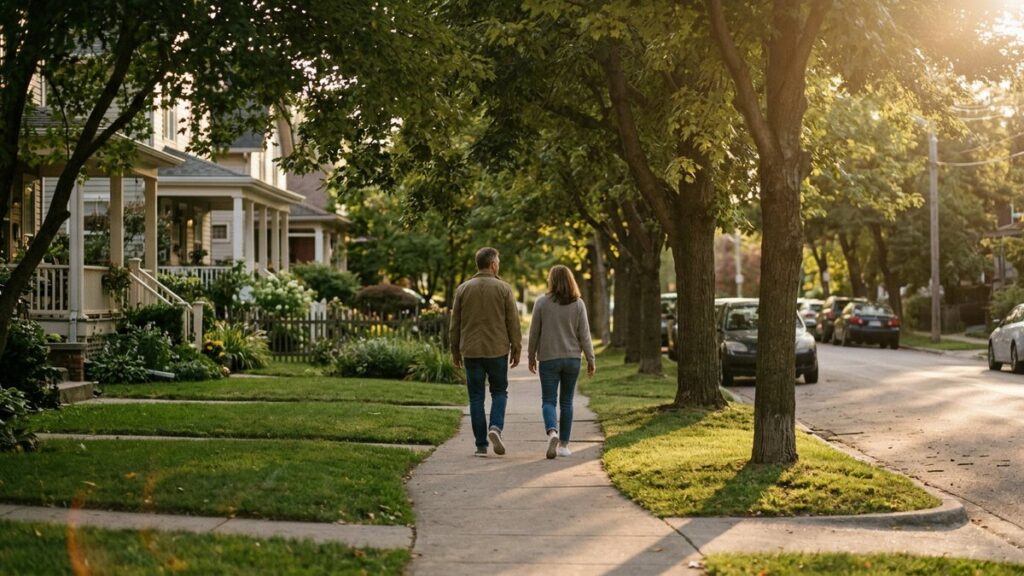
Walking after eating is one of the simplest ways to flatten the blood sugar rise that follows a meal. Aim for 10 to 15 minutes, started as soon as you comfortably can after you finish eating; even 2 to 5 minutes helps when repeated through the day. The weight effect is small, roughly 35 to 55 calories per 10-minute brisk walk, but the habit is easy to keep.
Key takeaways
- In a 2023 meta-analysis of eight trials, exercise after a meal (mostly walking) lowered the blood sugar spike more than resting or exercising before the meal. The sooner people started, the bigger the effect.
- In adults with type 2 diabetes, walking 10 minutes after each main meal left post-meal blood sugar 12% lower than one 30-minute walk a day, and 22% lower after dinner.
- Small studies suggest a gentle walk after meals can speed stomach emptying and ease bloating, but the evidence is limited.
- For weight, expect a small extra calorie burn. Three 10-minute brisk walks burn about 133 calories a day for a 155-pound person.
- If you take insulin or pills that make your body release more insulin, talk to your care team first, because walking after meals lowers blood sugar.
What walking after eating does to blood sugar
After a meal, glucose from your food enters the blood. When you walk, your leg muscles contract and pull in glucose through a pathway that does not depend on insulin.
The authors of a 2022 meta-analysis in Sports Medicine point to this muscle uptake to explain why light walking breaks lowered both post-meal glucose and insulin. The body needed less insulin to clear the same meal.
That analysis pooled seven one-day trials. Most volunteers were adults with overweight or obesity.
Light walking, often at about 2 miles per hour, beat sitting for both glucose and insulin. Standing breaks lowered glucose too, but less than walking and with no significant effect on insulin.
Note what these trials actually tested. They used repeated short breaks across a day of sitting, not a single walk right after a meal.
The breaks ranged from 2 minutes every 20 minutes to longer bouts once an hour. The takeaway still holds: a little movement after eating beats sitting still.
What the main studies tested
| Study | Who took part | What they did | What happened |
|---|---|---|---|
| Buffey et al., 2022 meta-analysis (7 trials) | Mostly adults with overweight or obesity | Light walking breaks during long sitting, often 2 minutes every 20 minutes | Lower post-meal glucose and insulin than sitting; standing helped glucose less |
| Engeroff et al., 2023 meta-analysis (8 trials, 116 people) | People with and without type 2 diabetes | Exercise, mostly walking, before vs after a meal vs no exercise | Post-meal exercise lowered the glucose spike; pre-meal exercise did not; starting sooner worked better |
| Reynolds et al., 2016 (41 adults) | Adults with type 2 diabetes | 10 minutes after each main meal vs 30 minutes once a day, for 2 weeks each | 12% lower post-meal glucose overall and 22% lower after dinner with post-meal walks |
How long to walk after eating
No study has pinned down one best duration, but the research gives a useful range:
- 2 to 5 minutes: enough to lower post-meal glucose when repeated through a long stretch of sitting, based on the 2022 meta-analysis.
- 10 minutes: the amount used after each main meal in the Reynolds trial in Diabetologia. Both schedules added up to 30 minutes a day. Only the timing differed, and the post-meal schedule won.
- 15 minutes: the American Diabetes Association position statement on exercise cites 15 minutes of post-meal walking as one way to break up sitting and improve blood sugar control.
- 20 minutes: the example the 2023 meta-analysis gives in its key points for a walk that blunts the post-meal rise.
For most people, 10 to 15 minutes after each main meal is a practical target. If you only have 2 minutes, take them. If you have time after dinner, a longer walk adds more calories burned and more activity minutes.
How soon to walk after eating
Sooner is better. In the 2023 meta-analysis, shorter gaps between the end of the meal and the start of exercise meant smaller glucose spikes.
The authors concluded that walking does the most good when it starts as soon as possible after a meal. Exercising before the meal did not lower the post-meal rise compared with doing nothing.
Several of the included trials started walking 15 to 20 minutes after the meal, and one started 60 minutes after breakfast. A practical goal is to be moving within about 30 minutes of finishing.
If that is not possible, a later walk still counts toward your weekly activity. It just does less for that meal’s glucose peak.
If walking right after a big meal gives you a side stitch or heartburn, slow down, keep the pace gentle or wait 10 to 15 minutes before you set off.
Walking after dinner for weight loss: what to expect
Be realistic here. The studies above measured blood sugar over hours or days. None tested whether post-meal walks lead to more weight loss over months than walking at other times.
Any weight benefit comes from the extra activity itself. Harvard Health estimates that walking at 3.5 mph for 30 minutes burns about 107 calories at 125 pounds, 133 at 155 pounds and 159 at 185 pounds.
Split into three 10-minute walks, that is about 36, 44 and 53 calories per walk. For a 155-pound person, three walks a day add up to about 930 calories a week. A slower stroll burns less.
On its own, that is a modest amount. The Physical Activity Guidelines for Americans say many adults need more than 150 minutes of moderate activity a week to maintain their weight.
People who want to lose more than 5% of their body weight, or keep it off, may need more than 300 minutes a week. The guidelines add that cutting calories and moving more together work better than either one alone.
This is where post-meal walks help most. Three 10-minute brisk walks a day come to 210 minutes a week, well past 150 and 70% of the way to 300. Easy strolls still help blood sugar, but only brisk minutes count toward the guideline.
The guidelines also dropped the old rule that activity had to come in bouts of at least 10 minutes. Bouts of any length now count.
Dinner is the best place to start. In the Reynolds trial, the biggest drop came after the evening meal, when people ate the most carbohydrate and sat the most.
Does walking after eating help digestion?
It may, but the evidence is small. In a 2008 study of 10 healthy men, a slow treadmill walk (about 2.5 mph) after a 576-calorie meal cut the time for half the meal to leave the stomach from about 123 to 107 minutes. Fullness and bloating scores did not change.
Gas and bloating have a little more support. In a 2021 randomized trial of 94 people with functional bloating (frequent bloating with no other digestive disorder found), a 10- to 15-minute walk after each meal for 4 weeks eased belching, gas, fullness and abdominal discomfort.
The walkers did as well as a group given a prokinetic drug plus an anti-gas medicine, and better for fullness and bloating after meals. There was no group that did nothing, and symptoms were self-reported, so treat the result as promising rather than proven.
Other benefits: blood pressure, mood and sleep
A brisk walk does more than steady blood sugar. The Physical Activity Guidelines say a single session of moderate-to-vigorous activity can lower blood pressure, ease anxiety symptoms and improve sleep on the day you do it. Done regularly, activity also lowers the risk of depression.
An after-dinner walk can also replace time on the couch. The guidelines report strong evidence that regular moderate-to-vigorous activity improves sleep quality, and better sleep supports appetite control, as we explain in our guide to sleep and weight loss.
Pace matters here. In the 2022 meta-analysis, light walking breaks lowered glucose and insulin but did not change systolic blood pressure. If heart health is a goal, make at least one post-meal walk brisk.
A simple 4-week post-meal walking plan
Start small and build. “Brisk” means about 2.5 mph or faster, the pace the Physical Activity Guidelines count as moderate intensity. You should be able to talk, but not sing.
| Week | When to walk | How long | Pace | Weekly total |
|---|---|---|---|---|
| 1 | After dinner | 5 to 10 minutes | Easy | 35 to 70 minutes |
| 2 | After lunch and dinner | 10 minutes each | Easy to brisk | 140 minutes |
| 3 | After breakfast, lunch and dinner | 10 minutes each | Brisk if comfortable | 210 minutes |
| 4 and beyond | After all main meals, plus short breaks when you sit a long time | 10 minutes after meals; stretch dinner to 15 to 20 minutes | Brisk | 245 to 280 minutes |
Week 4 totals assume three meal walks a day and a dinner walk of 15 to 20 minutes, before counting any short breaks.
Tips that make the habit stick
- Anchor it to the meal. Put your shoes by the door or walk while the dishes soak.
- Use indoor options. In bad weather, walk laps around the house, a hallway or a mall. Standing and moving around still helps a little.
- Pair it with the meal itself. A walk blunts a spike but does not erase it, and meals with fewer refined carbs keep glucose steadier. Our low carb diet guide shows how to build them.
- Add longer sessions when ready. Post-meal walks are a base, not a ceiling. Our list of cardio exercises for weight loss has options for longer workouts.
- Keep expectations honest. For what walking can and cannot do for your waistline, see does walking burn belly fat.
For more small habits that add up, browse our weight loss tips.
If you have diabetes
Post-meal walks can be especially useful if you have type 2 diabetes. The American Diabetes Association recommends interrupting long periods of sitting every 30 minutes with light activity, and its position statement notes that brief activity lowers glucose most after meals.
The catch is low blood sugar. The ADA’s guide to blood glucose and exercise says people who take insulin or insulin secretagogues (diabetes pills that make the pancreas release more insulin) can go low if their dose or carbohydrate intake is not adjusted for exercise. It advises:
- Check your blood glucose before activity, and more often at first, to learn how walking affects you.
- If you feel low during or after a walk, check your glucose. At 100 mg/dL or lower, have 15 to 20 grams of carbohydrate, such as 4 glucose tablets or half a cup of juice, then recheck after 15 minutes and repeat until you are at least 100 mg/dL.
- Remember that lows can happen during activity or long after it.
Ask your diabetes care team whether your medicine or meal plan should change if you start walking after every meal. The ADA position statement says changes to insulin doses and carbohydrate intake are the main ways to prevent lows linked to exercise.
If you have acid reflux
A gentle walk keeps you upright, which is better than lying on the couch after a meal. The National Institute of Diabetes and Digestive and Kidney Diseases (NIDDK) says that if reflux bothers you at night, eating meals at least 3 hours before you lie down may help. An after-dinner stroll is an easy way to use part of that time.
Keep the pace easy after large meals. If walking brings on heartburn, slow down or wait a little longer before you start. If you have heartburn often, or symptoms such as trouble swallowing, see your doctor.
Who should check with a doctor first
The Physical Activity Guidelines say activity can be safe for almost everyone, and they advise inactive people to “start low and go slow.” Adults with chronic conditions or symptoms should be under the care of a health care provider and can ask what type and amount of activity suits them.
That includes people with heart or lung disease, people who get chest pain or dizziness with activity, and anyone taking insulin or insulin-releasing diabetes pills. Stop and get medical help if you have chest pain, fainting or severe shortness of breath while walking.
Frequently asked questions
How long should you walk after eating?
Aim for 10 to 15 minutes after each main meal. A trial in adults with type 2 diabetes used 10 minutes after meals, and the ADA cites 15-minute post-meal walks. Even 2 to 5 minutes of light walking lowers post-meal glucose when you repeat it every 20 to 30 minutes during long sitting.
Is it better to walk before or after eating?
For blood sugar, after. A 2023 meta-analysis found that exercise after a meal lowered the glucose spike, while exercise before the meal did not lower it compared with no exercise. For total calories burned, both count the same.
Is a 2-minute walk after eating enough?
It helps, especially if you repeat it. The trials behind the “2-minute walk” headlines had people take short walking breaks about every 20 to 30 minutes during long sitting. One 2-minute walk is better than none, but 10 minutes or more after a meal gives a bigger dose.
Does walking after dinner help you lose weight?
It can help a little, since a 10-minute brisk walk burns about 35 to 55 calories, depending on your weight. The bigger payoff is that three brisk 10-minute walks a day add up to more than 150 minutes a week. Combined with eating fewer calories, that supports weight loss and helps keep weight off.
Is it bad to walk right after eating?
No, for most people an easy walk right after a meal is fine and gives the best blood sugar benefit. If you get a side stitch, cramps or heartburn, slow down or wait 10 to 15 minutes. Save hard runs or intense workouts for later.
Does walking after eating help with bloating?
It may. In a 2021 trial, people with frequent bloating who walked 10 to 15 minutes after each meal for 4 weeks reported less bloating, gas and fullness, but there was no untreated group to compare with. See a doctor if bloating is new or severe, or comes with weight loss or blood in your stool.
Sources
- Buffey AJ, et al. The acute effects of interrupting prolonged sitting time in adults with standing and light-intensity walking on biomarkers of cardiometabolic health in adults: a systematic review and meta-analysis. Sports Medicine, 2022.
- Engeroff T, et al. After dinner rest a while, after supper walk a mile? A systematic review with meta-analysis on the acute postprandial glycemic response to exercise before and after meal ingestion. Sports Medicine, 2023.
- Reynolds AN, et al. Advice to walk after meals is more effective for lowering postprandial glycaemia in type 2 diabetes mellitus than advice that does not specify timing: a randomised crossover study. Diabetologia, 2016.
- Colberg SR, et al. Physical activity/exercise and diabetes: a position statement of the American Diabetes Association. Diabetes Care, 2016.
- American Diabetes Association. Blood glucose and exercise.
- U.S. Department of Health and Human Services. Physical Activity Guidelines for Americans, 2nd edition.
- Harvard Health Publishing. Calories burned in 30 minutes for people of three different weights.
- Franke A, et al. Postprandial walking but not consumption of alcoholic digestifs or espresso accelerates gastric emptying in healthy volunteers. Journal of Gastrointestinal and Liver Diseases, 2008.
- Hosseini-Asl MK, et al. The effect of a short-term physical activity after meals on gastrointestinal symptoms in individuals with functional abdominal bloating: a randomized clinical trial. Gastroenterology and Hepatology from Bed to Bench, 2021.
- National Institute of Diabetes and Digestive and Kidney Diseases. Eating, diet and nutrition for GER and GERD.