Hibiscus tea weight loss claims do not hold up in trials: when researchers pooled six studies, people taking hibiscus lost no more weight than people taking a placebo or another tea. Where hibiscus does show a real effect is blood pressure, which fell by about 7 points (systolic) in pooled trials. As a zero-calorie, caffeine-free drink, it can still help if it replaces soda or sweet tea.
Key takeaways
- Across six trials with 339 people, hibiscus made no meaningful difference to weight, body mass index or waist size.
- Its best-supported benefit is lower blood pressure: about 7 mmHg off systolic pressure compared with placebo, other teas or diet changes, with bigger drops in people whose pressure was high to begin with.
- The effect on cholesterol is small. LDL (“bad”) cholesterol fell about 7 mg/dL in pooled trials, and total cholesterol did not change significantly.
- The main tea trial used about 1.25 grams of dried hibiscus per 8-ounce cup, three cups a day, for six weeks.
- Check with your doctor first if you take blood pressure medicine (especially hydrochlorothiazide), warfarin or chloroquine, or if you are pregnant or breastfeeding.
What is hibiscus tea?
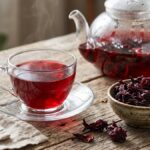
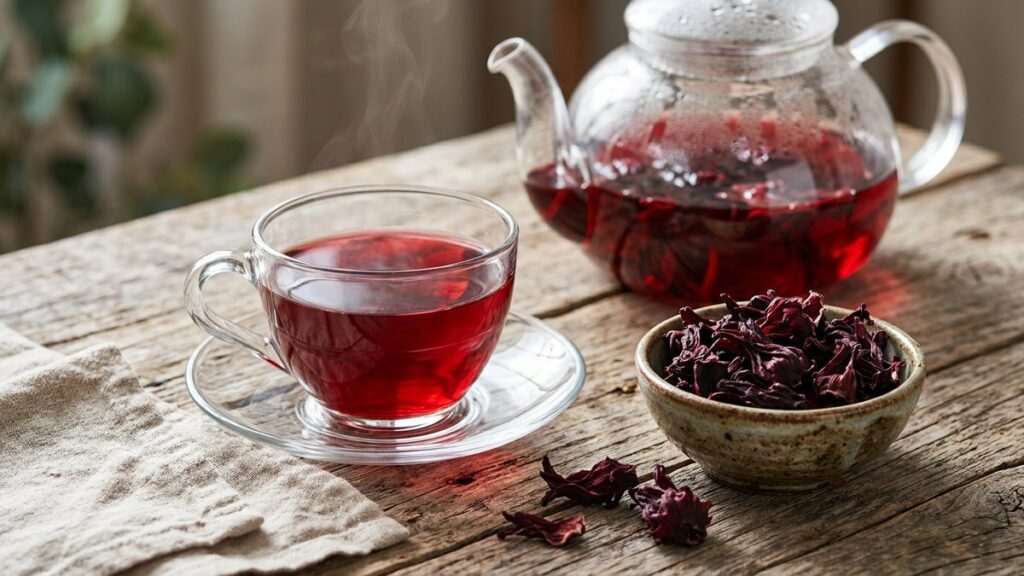
Hibiscus tea is an herbal tea made from the dried, deep red calyces (the cup-like base of the flower) of Hibiscus sabdariffa, also called roselle. It has a tart, fruity taste.
Because it does not come from the tea plant, it has no caffeine. USDA FoodData Central lists brewed hibiscus tea at 0 calories and 0 mg of caffeine.
That zero matters. Sweetened versions, such as some bottled drinks and agua de jamaica made with sugar, add calories that can erase the main weight-related upside.
Hibiscus tea weight loss: what the trials show
The best summary is a 2024 meta-analysis that pooled six randomized trials with 339 participants. Four trials tested hibiscus extract capsules against a placebo, and two compared hibiscus tea with black or green tea.
The average difference in weight was just 0.27 kg (about half a pound), and the range of plausible results included no effect at all. Body mass index and waist size did not differ either. The authors concluded that hibiscus extract showed no clinical benefit for obesity.
That matters because most of the evidence comes from concentrated capsules, not the tea you brew at home, and even those did not move the scale in a meaningful way. A cup of hibiscus tea is not a fat burner.
What can help is the swap. Trading one 12-ounce soda a day for unsweetened hibiscus tea removes those sugar calories with no change in your routine. If you want to compare other teas sold for weight control, see our guides to metabolism-boosting tea and green tea extract.
Why some sites say hibiscus tea burns fat
Some small trials of hibiscus extract capsules did report a little extra weight loss, and those results are where most online claims come from. When the 2024 meta-analysis pooled the available randomized trials, the difference shrank to about half a pound.
Hibiscus may also act as a diuretic, an idea based mainly on animal studies, according to a 2022 meta-analysis of hibiscus and blood pressure. A quick drop on the scale from extra urine would be water, not fat.
Hibiscus tea benefits: evidence at a glance
| Outcome | What trials found | Verdict |
|---|---|---|
| Body weight | 0.27 kg difference vs control across 6 trials; not statistically significant | Not supported |
| Waist size and BMI | No meaningful difference across the same 6 trials | Not supported |
| Blood pressure | Systolic pressure about 7 mmHg lower than placebo, other teas or diet changes in pooled trials; similar to some blood pressure medicines in head-to-head trials | Supported, modest |
| LDL cholesterol | About 6.8 mg/dL lower than placebo or other teas; borderline significance | Possible, small |
| Total cholesterol, triglycerides, HDL | No significant change | Not shown |
| Fasting blood sugar | No significant change | Not shown |
Hibiscus tea and blood pressure
Blood pressure is where the evidence is strongest, although results varied a lot between studies. The same 2022 meta-analysis, which covered 17 trials, found that hibiscus lowered systolic blood pressure (the top number) by about 7.1 mmHg more than placebo, other teas or diet changes. Against placebo alone, the drop was about 10 mmHg.
The drop was largest in people whose blood pressure was high at the start. In the few trials that compared hibiscus with blood pressure medicine, the reductions were similar.
The key tea trial, the only placebo-controlled one at the time, is described in a 2013 review of hibiscus research. Adults with high-normal or mildly high blood pressure drank three cups of hibiscus tea a day for six weeks, each made with 1.25 grams of dried hibiscus in 240 mL of just-boiled water. Their systolic pressure fell by 7.2 mmHg, compared with 1.3 mmHg in people who drank a placebo drink with hibiscus flavor.
Dose and time seem to matter. In the 2022 meta-analysis, studies lasting longer than four weeks showed a significant drop, while doses of 1 gram a day or less did not. Three cups brewed this way supply about 3.75 grams a day.
A 7-point drop is meaningful, but it is not a reason to stop or skip prescribed medicine. Think of hibiscus tea as an add-on to your treatment plan, not a replacement. And if a warm, caffeine-free cup in the evening helps you unwind, it can be one small part of a broader plan for managing stress during weight loss.
How to brew hibiscus tea and how much to drink
- Measure. Use about 1.25 grams of dried hibiscus per 8-ounce (240 mL) cup, the amount used in the main tea trial. If you use tea bags, check the box for grams per bag.
- Steep. Pour just-boiled water over it and steep for about 5 minutes. Longer steeping makes a stronger, more tart cup.
- Strain and flavor. Drink it plain, or add lemon, mint, ginger or cinnamon instead of sugar.
- Make it iced. Brew it double strength, then pour it over ice.
- Keep to the studied amount. Three cups a day is the amount tested in the tea trial. There is no evidence that more helps.
Want more ideas for unsweetened drinks? Our fat burn drink guide looks at popular recipes and what the evidence says about them.
Hibiscus tea before bed
Because it has no caffeine, hibiscus tea will not keep you awake the way black or green tea can.
Two cautions apply. A large mug of any drink close to bedtime may mean a trip to the bathroom at night. And if you take blood pressure medicine, ask your doctor whether adding hibiscus, at any time of day, could push your pressure too low.
Hibiscus tea side effects and who should avoid it
Hibiscus tea is generally well tolerated. In the 2022 meta-analysis, one study reported mild stomach symptoms with 1 gram of extract that went away within a week, and no other side effects were reported. The six weight-loss trials reported no safety concerns.
Concentrated extracts are a different matter. At very high doses in animals, hibiscus extract has affected the liver, kidneys and reproductive organs, according to the 2013 review and a 2026 review of roselle safety.
Possible drug interactions
| Medicine | What has been reported | What to do |
|---|---|---|
| Blood pressure medicines | Hibiscus lowers blood pressure, and lab studies suggest it may act like an ACE inhibitor; its interaction with drugs such as ramipril has not been studied | Ask your doctor before drinking it regularly |
| Hydrochlorothiazide (a diuretic) | In animal studies, hibiscus increased urine output and slowed clearance of the drug; reviewers advise against combining them | Avoid unless your doctor approves |
| Acetaminophen (Tylenol) | In a study in adult men, drinking hibiscus first made the body clear acetaminophen faster | Reviewers suggest taking acetaminophen 3 to 4 hours before hibiscus |
| Warfarin | One 2026 case report described a severely high INR (a blood-clotting test) after a woman on warfarin drank hibiscus tea | Tell your anticoagulation clinic before adding it |
| Chloroquine | The 2026 roselle review lists an interaction affecting how the body handles this malaria drug | Avoid while taking it |
Pregnancy, breastfeeding and low iron
We found no good human safety studies of hibiscus in pregnancy or breastfeeding. In a 2025 rat study, high doses of hibiscus extract given late in pregnancy caused genetic damage in newborn rats. Animal results at extract doses do not prove that a cup of tea is harmful, but they are a reason to skip it or ask your obstetric care team first.
Hibiscus may also affect iron. The 2026 roselle review notes that compounds in hibiscus drinks bind iron, leaving only about a quarter of the iron added to a fortified roselle drink available for absorption. If you are trying to raise your iron, drinking it between meals rather than with iron-rich food is a reasonable precaution.
Hibiscus capsules and extracts are dietary supplements. The FDA is not authorized to review supplements for safety and effectiveness before they are sold, according to the National Center for Complementary and Integrative Health.
Talk to your doctor or pharmacist before drinking hibiscus tea regularly if you: take blood pressure medicine or a diuretic; take warfarin, chloroquine or regular acetaminophen; already have low blood pressure or get dizzy when you stand; are pregnant or breastfeeding; or plan to take hibiscus capsules or extracts.
Find more food and drink guides in our healthy eating section.
Frequently asked questions
Does hibiscus tea burn belly fat?
No. A 2024 meta-analysis of six trials found no meaningful difference in waist size or body weight between people taking hibiscus and those taking a placebo or another tea. Unsweetened hibiscus tea can help only indirectly, by replacing sugary drinks.
How much hibiscus tea should I drink to lower blood pressure?
The main tea trial used three 8-ounce cups a day, each brewed with about 1.25 grams of dried hibiscus, for six weeks. In pooled studies, 1 gram a day or less did not lower blood pressure significantly. Do not use it in place of prescribed treatment.
Is it safe to drink hibiscus tea every day?
For most healthy adults, daily hibiscus tea appears safe in the amounts studied, and trials reported few side effects. Check with your doctor first if you take blood pressure medicine, a diuretic, warfarin or chloroquine, or if you are pregnant or breastfeeding.
Does hibiscus tea have caffeine?
No. Hibiscus tea is made from the hibiscus plant, not the tea plant, and USDA data list brewed hibiscus tea at 0 mg of caffeine. That makes it a reasonable evening drink.
Is hibiscus tea good for your kidneys or liver?
There is no good evidence that it helps either organ. The 2013 review notes that studies mostly show no change in liver and kidney tests, but very high doses of extract raised liver enzymes in animals. If you have kidney or liver disease, ask your doctor before using hibiscus extracts.
Sources
- Dilokthornsakul P, et al. Clinical effects of Hibiscus sabdariffa Linn. on obesity treatment: a systematic review and meta-analysis of randomized controlled trials. Complementary Therapies in Medicine, 2024.
- Ellis LR, et al. A systematic review and meta-analysis of the effects of Hibiscus sabdariffa on blood pressure and cardiometabolic markers. Nutrition Reviews, 2022.
- Hopkins AL, et al. Hibiscus sabdariffa L. in the treatment of hypertension and hyperlipidemia: a comprehensive review of animal and human studies. Fitoterapia, 2013.
- Dada T, et al. Edible rose and roselle: a critical review of nutritional composition, safety, and regulatory considerations for product development. Journal of Food Science, 2026.
- Bani Yaseen K, et al. Possible interaction between hibiscus and warfarin resulting in severe international normalized ratio elevation: a case report. Cureus, 2026.
- Tobanche Mireles Y, et al. Genomic and cytotoxic damage in Wistar rats and their newborns after transplacental exposure to Hibiscus sabdariffa hydroalcoholic extract. International Journal of Molecular Sciences, 2025.
- USDA FoodData Central, SR Legacy: Beverages, tea, hibiscus, brewed (FDC ID 171946).
- National Center for Complementary and Integrative Health. Using Dietary Supplements Wisely.