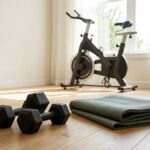
Zone 2 cardio for fat loss works, but not because of a special “fat-burning zone.” Zone 2 is steady, easy-to-moderate cardio, where you breathe harder than at rest but can still talk in full sentences. It burns a larger share of fat while you exercise. Fat loss over weeks, though, depends on total calories burned and eaten. Research finds steady cardio and HIIT lead to similar fat loss when the total work is matched.
Key takeaways
- Zone 2 has no single official definition. It is usually set at 60% to 70% of your maximum heart rate, a steady pace where you can still hold a conversation.
- The simplest way to find it is the talk test: you can hold a conversation, but you couldn’t sing.
- Your body burns the most fat per minute at moderate intensity, but total calories burned matter more for fat loss.
- Reviews find no difference in weight or fat loss between steady cardio and HIIT when both burn the same energy.
- Exercise alone rarely produces big weight loss. Zone 2 works best alongside a modest calorie deficit and strength training.
What is zone 2 cardio?
“Zone 2” comes from heart-rate training, which splits effort into zones, usually five, from very easy to all-out. Zone 2 is the second-easiest zone. You’ll hear it described three ways, and they don’t line up perfectly:
- Physiology. Researchers usually define zone 2 as low-intensity exercise below the lactate threshold, the point where lactate starts to build up in the blood (Storoschuk et al., Sports Medicine, 2025). Pinpointing that threshold takes a lab test.
- Heart rate. Watches and fitness trackers set zones from your heart rate, often as a percentage of your maximum. Zone 2 is typically 60% to 70% of your maximum heart rate, or a pace where you can hold a conversation even though you breathe harder (Human Performance Resources by CHAMP).
- Feel. Zone 2 sits around the easier end of moderate effort. You’re breathing harder than normal, but the pace feels like you could keep it up for a long time.
How to find your zone 2 heart rate
Use one of these three methods. The talk test is the easiest, and it works for everyone, including people whose medicines change their heart rate.
1. The talk test
The Physical Activity Guidelines for Americans give a simple rule of thumb. During moderate activity, you can talk but not sing. During vigorous activity, you can’t say more than a few words without pausing for breath (Physical Activity Guidelines for Americans, 2nd edition).
For zone 2, aim for the easier side of “can talk”: you can speak in full sentences, but you notice your breathing. If you have to break up sentences to breathe, you’ve drifted above zone 2. On the guidelines’ 0-to-10 effort scale, where moderate effort is a 5 or 6, zone 2 should feel like roughly a 5.
2. A heart-rate formula
The usual estimate of maximum heart rate is 220 minus your age. Moderate intensity is about 64% to 76% of that number, and vigorous intensity about 77% to 93% (Harvard Health Publishing). Zone 2 is usually set at 60% to 70% of maximum heart rate, which overlaps the bottom of the moderate range (Human Performance Resources by CHAMP).
| Age | Estimated max heart rate (220 − age) | Typical zone 2, 60%–70% (beats per minute) | Moderate range, 64%–76% (beats per minute) |
|---|---|---|---|
| 30 | 190 | 114–133 | 122–144 |
| 40 | 180 | 108–126 | 115–137 |
| 50 | 170 | 102–119 | 109–129 |
| 60 | 160 | 96–112 | 102–122 |
| 70 | 150 | 90–105 | 96–114 |
Treat these numbers as a starting point. The 220-minus-age formula was built mostly on testing in men, tends to overestimate maximum heart rate in women, and can be off by as much as 15 beats per minute for anyone (Harvard Health Publishing). If the formula and the talk test disagree, trust the talk test.
3. Your watch, or a lab test
Fitness trackers do the math for you, but brands define zones differently, so check how your device sets zone 2. For a precise answer, a sports medicine clinic or exercise lab can measure your lactate threshold. Most people don’t need one to lose fat.
Fat burning vs calories burned: why the “fat-burning zone” misleads
Your muscles always burn a mix of fat and carbohydrate. At easy-to-moderate effort, fat supplies a larger share. A review on fat metabolism found that fat burning per minute peaks at moderate intensity, roughly 45% to 65% of maximal aerobic capacity. Above that range, carbohydrate takes over as the main fuel (Purdom et al., Journal of the International Society of Sports Nutrition, 2018).
That’s the grain of truth behind the zone 2 hype. Here’s the catch: burning fat during a workout is not the same as losing body fat over time. What changes your body fat is your energy balance across days and weeks: the total calories you burn compared with the total you eat. A harder session can burn more calories in the same time, even if a smaller share comes from fat.
The research backs this up. An overview of 12 systematic reviews covering 149 studies found no difference in weight loss, fat loss or loss of visceral (deep belly) fat between steady aerobic training and high-intensity interval training, as long as both burned the same amount of energy (Bellicha et al., Obesity Reviews, 2021).
Zone 2 vs HIIT for fat loss
The big reviews point the same way: both work, and the gap between them is small.
- Weight and fat loss are similar when energy use is matched. That’s the main finding of the 2021 overview above.
- Intervals may have a slight edge on body fat percentage. A 2024 umbrella review of studies in generally healthy adults pooled 16 systematic reviews with 79 randomized trials. Interval training cut body fat percentage by about 0.8 percentage points more than steady moderate cardio. Most of the included reviews were rated low or critically low in quality (Poon et al., Sports Medicine, 2024).
- Zone 2 isn’t the best intensity for fitness gains. A 2025 review found the evidence doesn’t support zone 2 as the optimal intensity for building mitochondria or fat-burning capacity. It concluded that harder efforts matter most when weekly training time is limited. Much of the zone 2 enthusiasm comes from elite endurance athletes who train many hours a week (Storoschuk et al., Sports Medicine, 2025).
So which should you pick? Choose the one you’ll do consistently. Zone 2 feels easy enough to repeat most days, so the minutes add up. A practical mix for many people is mostly zone 2, plus one short interval session a week once you have a base. Our guide to HIIT workouts for weight loss has interval options when you’re ready.
| Zone 2 cardio | HIIT | |
|---|---|---|
| How it feels | Steady; you can talk in full sentences | Hard bursts; only a few words at a time |
| Time per session | Longer (30–60 minutes) | Shorter (10–30 minutes) |
| Fat loss when energy use is matched | Similar | Similar |
| Fitness gains | Smaller per minute of training | Larger per minute of training |
| Recovery | Easy to repeat most days | Harder to recover from |
| Best for | Beginners, building volume, active recovery | Busy schedules, people who are already fit |
How much zone 2 cardio for fat loss is enough?
Be realistic about what cardio alone can do. Across reviews, exercise programs led to about 1.5 to 3.5 kg (3 to 8 lb) of weight loss (Bellicha et al., 2021). A 2026 American Heart Association scientific statement says exercise on its own is unlikely to produce clinically meaningful weight loss, at least 5% of body weight, unless aerobic activity is very high. Combined with eating fewer calories, it adds to weight loss and improves heart and metabolic health (Swift et al., Circulation, 2026).
The federal guidelines recommend 150 to 300 minutes of moderate activity a week for health. People who want to lose more than 5% of their body weight, or keep a large loss off, may need more than 300 minutes a week (Physical Activity Guidelines for Americans). Zone 2 is a comfortable way to reach those numbers. To set your eating side, see how many calories you need to lose weight.
Zone 2 cardio examples
Any steady activity that keeps you in the talk-test range counts:
- Brisk walking, outdoors or on a treadmill. Add an incline if a flat walk feels too easy. See whether walking burns belly fat for more.
- Cycling, on a road, trail or stationary bike.
- Elliptical or stair stepper at an easy, steady pace.
- Rowing machine, at a pace you could hold for 30 minutes or more.
- Swimming or water walking, a good option if walking or jogging bothers your joints.
- Easy jogging, for people who are already fit. For many beginners, jogging can push heart rate above zone 2.
Our guide to cardio exercises for weight loss covers more machines and workouts.
Beginner zone 2 plan: 8 weeks
The guidelines advise inactive people to “start low and go slow,” building up how often and how long they exercise (Physical Activity Guidelines for Americans). This plan does that. Strength training is included because resistance training reduces the loss of lean mass during weight loss (Bellicha et al., 2021).
| Weeks | Zone 2 cardio | Strength training | Weekly cardio total |
|---|---|---|---|
| 1–2 | 3 sessions of 20 minutes | 2 short full-body sessions | 60 minutes |
| 3–4 | 4 sessions of 25 minutes | 2 sessions | 100 minutes |
| 5–6 | 4 sessions of 35 minutes | 2 sessions | 140 minutes |
| 7–8 | 4 sessions of 40 minutes, plus one optional 15-minute interval session | 2–3 sessions | 160–175 minutes |
A few tips to make it work:
- Warm up for 5 minutes at an easy pace before settling into zone 2.
- Expect your heart rate to creep up late in a long session, especially in heat. Slow down to stay in range.
- Walking breaks are fine. Staying in the right effort range matters more than keeping a fast pace.
- After week 8, keep adding minutes toward 150 to 300 a week, and pair the plan with strength training exercises for weight loss.
Who should check with a doctor first
Zone 2 is gentle, but it’s still exercise. Adults with chronic conditions or symptoms should be under the care of a health care provider and can ask what types and amounts of activity suit them (Physical Activity Guidelines for Americans). Talk to your doctor before you start if:
- You have heart disease or are at risk for it. People with or at risk for heart disease should check with their clinician about how to exercise safely (Harvard Health Publishing).
- You take a beta-blocker or another medicine that slows your heart. Beta-blockers such as metoprolol and carvedilol slow the heart (Harvard Health Publishing), so heart-rate formulas and watch zones won’t fit you. Use the talk test or effort scale, and ask your doctor for a safe range.
- You have diabetes and use insulin or medicines that can cause low blood sugar. Ask how to adjust food or doses around exercise.
- You’re pregnant, or you have high blood pressure, lung disease, or joint problems. Your care team can tailor the plan.
- You notice chest pain, pressure, severe shortness of breath, dizziness, or fainting during activity. Stop and get medical care right away.
Frequently asked questions
Is zone 2 cardio good for fat loss?
Yes, as one part of a plan. Zone 2 burns calories and is easy to repeat often, which helps you reach the activity levels linked to weight loss. It works best with a modest calorie deficit and strength training, not as a stand-alone fix.
Is walking zone 2 cardio?
Often, yes. A brisk walk keeps many beginners in zone 2. If you’re fit, you may need hills, an incline or a faster pace to get there. Use the talk test to check.
What heart rate is zone 2?
Most trackers put zone 2 at about 60% to 70% of your maximum heart rate. For a 40-year-old, using 220 minus age, that’s roughly 108 to 126 beats per minute. The formula can be off by up to 15 beats a minute, so check it with the talk test.
Is zone 2 better than HIIT for losing fat?
Not better, and not worse. Reviews find similar weight and fat loss when both burn the same energy. Interval training may trim slightly more body fat percentage, and it takes less time, but zone 2 is easier to recover from and to stick with.
How long should a zone 2 session be?
Beginners can start with 20 minutes and build to 30 to 60 minutes. The weekly total matters most. Aim to work up to at least 150 minutes a week, and more if weight loss is your goal.
Why is my heart rate so high during easy cardio?
Hot weather, dehydration, nerves and stimulant drugs can all push your heart rate up (Harvard Health Publishing). The 220-minus-age formula can also be off for you. Slow down until you pass the talk test. As you get fitter, the same pace will feel easier.
Find more workouts and training guides in our exercise and fitness section.
Sources
- US Department of Health and Human Services. Physical Activity Guidelines for Americans, 2nd edition.
- Harvard Health Publishing. All about your heart rate.
- Human Performance Resources by CHAMP (Uniformed Services University). What’s Zone 2 training, and why does it matter?
- Storoschuk KL, et al. Much ado about zone 2: a narrative review. Sports Medicine, 2025.
- Purdom T, et al. Understanding the factors that effect maximal fat oxidation. Journal of the International Society of Sports Nutrition, 2018.
- Bellicha A, et al. Effect of exercise training on weight loss, body composition changes, and weight maintenance in adults with overweight or obesity. Obesity Reviews, 2021.
- Poon ET, et al. Efficacy of interval training in improving body composition and adiposity: an umbrella review with meta-analysis. Sports Medicine, 2024.
- Swift DL, et al. Role of physical activity in obesity treatment and cardiometabolic health: a scientific statement from the American Heart Association. Circulation, 2026.