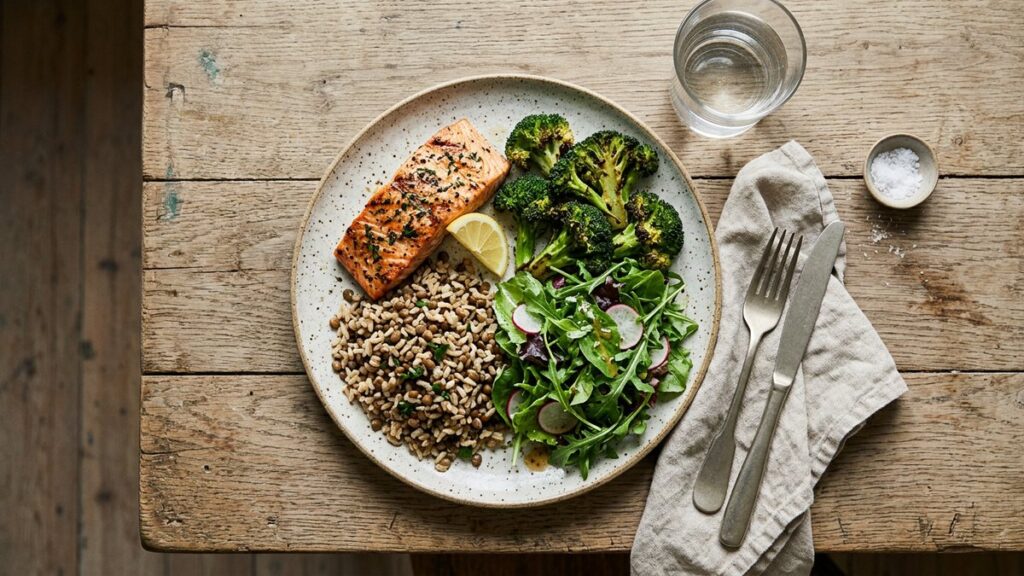
A good prediabetes diet plan does not ban whole food groups. It fills half your plate with non-starchy vegetables, a quarter with protein and a quarter with high-fiber carbs. It swaps sugary drinks for water and trims portions so you lose about 5% to 7% of your starting weight. In the Diabetes Prevention Program, a lower-calorie, lower-fat diet aimed at 7% weight loss, plus 150 minutes of brisk activity a week, cut new cases of type 2 diabetes by 58% compared with placebo.
Key takeaways
- Prediabetes means an A1C of 5.7% to 6.4%, a fasting blood glucose of 100 to 125 mg/dL, or a 2-hour glucose tolerance result of 140 to 199 mg/dL. Most people have no symptoms.
- In the Diabetes Prevention Program, people who aimed to lose 7% of their weight and move 150 minutes a week cut their diabetes risk by 58%. Adults 60 and older cut it by 71%.
- No single diet is proven best. The American Diabetes Association (ADA) found the most research for Mediterranean-style, low-fat and low-carb eating plans.
- Carb quality matters. Build meals around vegetables, beans, whole grains and whole fruit, and cut sugary drinks first.
- Medicare covers a year-long diabetes prevention program at no cost for people who qualify.
What prediabetes means
Prediabetes means your blood glucose (sugar) is higher than normal but not high enough to be diabetes. About 97.6 million US adults had it in 2021, and most people with prediabetes have no symptoms, according to the National Institute of Diabetes and Digestive and Kidney Diseases (NIDDK).
Doctors diagnose it with one of three blood tests. These are the cutoffs NIDDK lists for adults who are not pregnant:
| Test | Normal | Prediabetes | Diabetes |
|---|---|---|---|
| A1C | Below 5.7% | 5.7% to 6.4% | 6.5% or above |
| Fasting plasma glucose | 99 mg/dL or below | 100 to 125 mg/dL | 126 mg/dL or above |
| Oral glucose tolerance test (2-hour) | 139 mg/dL or below | 140 to 199 mg/dL | 200 mg/dL or above |
Risk rises if you are 35 or older, carry extra weight or a large waist, have a family history of diabetes, had gestational diabetes, have polycystic ovary syndrome (PCOS) or are inactive. The good news: NIDDK says healthy living may help prevent or reverse insulin resistance and prediabetes.
What the Diabetes Prevention Program found
The Diabetes Prevention Program (DPP) randomly assigned 3,234 US adults with raised blood glucose (average age 51, average BMI 34) to a placebo pill, the diabetes drug metformin or an intensive lifestyle program (New England Journal of Medicine, 2002).
The lifestyle group aimed to lose at least 7% of their body weight on a healthy low-calorie, low-fat diet and to get at least 150 minutes a week of moderate activity, such as brisk walking. Case managers taught a 16-lesson course on diet, exercise and behavior change over the first 24 weeks.
Results after an average of 2.8 years:
- The lifestyle group lost an average of 5.6 kg (about 12 pounds). The metformin group lost 2.1 kg, and the placebo group 0.1 kg.
- Lifestyle change cut new cases of diabetes by 58% compared with placebo. Metformin cut them by 31%.
- Half of the lifestyle group reached the 7% goal by week 24, and 38% were still there at their latest visit.
The benefit lasted. In the long-term follow-up study, the original lifestyle group still had a 27% lower rate of diabetes after 15 years, NIDDK reports. In the original trial, adults 60 and older did especially well, with a 71% lower risk.
How much weight should you aim to lose?
NIDDK says losing 5% to 7% of your starting weight helped people lower their chance of type 2 diabetes. The ADA’s 2019 nutrition consensus report sets a goal of 7% to 10% for people with prediabetes (Diabetes Care). Here is what those targets look like, rounded to the nearest pound:
| Starting weight | 5% loss | 7% loss | 10% loss |
|---|---|---|---|
| 160 lb | 8 lb | 11 lb | 16 lb |
| 180 lb | 9 lb | 13 lb | 18 lb |
| 200 lb | 10 lb | 14 lb | 20 lb |
| 220 lb | 11 lb | 15 lb | 22 lb |
| 250 lb | 13 lb | 18 lb | 25 lb |
How to build a prediabetes diet plan: the plate method
The plate method, which NIDDK describes for diabetes meal planning, controls portions without counting or measuring. NIDDK’s version divides a 9-inch plate like this:
- Half the plate: non-starchy vegetables. Leafy greens, peppers, carrots or green beans.
- A quarter: protein. Lean meats, fish, dairy, or tofu and other soy foods.
- A quarter: high-fiber carbohydrates. Brown rice, other whole grains, beans or fruit.
- On the side: water or another zero-calorie drink.
NIDDK also advises fewer foods high in saturated fat, sodium and sugar, and less alcohol. For people with diabetes, the ADA report adds three core habits: emphasize non-starchy vegetables, minimize added sugars and refined grains, and choose whole foods over highly processed ones when you can.
The plate fits several eating styles. The ADA report says the most robust prediabetes research covers Mediterranean-style, low-fat and low-carbohydrate plans, but the evidence is too limited to name a winner. In the PREDIMED trial, the Mediterranean-style pattern led to a 30% lower relative risk of type 2 diabetes than a low-fat diet, the report notes. Our low carb diet plan and Mediterranean diet meal plan show how each one looks day to day. Pick the one you can keep up for years.
Prediabetes diet food list: choosing better carbs
For people with diabetes, cutting back on total carbohydrate has the most evidence for improving blood glucose, the ADA report says. Quality matters too: the report encourages people with diabetes and those at risk to eat at least as much fiber as the general public is advised to. Use this list for the carb quarter of your plate.
| Food group | Choose more often | Choose less often |
|---|---|---|
| Grains | Steel-cut or rolled oats, barley, brown rice, quinoa, 100% whole-wheat bread | White bread, white rice, sweetened cereals, pastries |
| Beans and lentils | Lentils, black beans, chickpeas, kidney beans, split peas | Beans in sweet, sugary sauces |
| Starchy vegetables | Potato or sweet potato with the skin, corn, peas, kept to a quarter of the plate | French fries, potato chips |
| Fruit | Whole fresh or frozen fruit, such as berries, apples, pears and oranges | Fruit juice, fruit canned in syrup |
| Dairy | Milk, plain yogurt, plain Greek yogurt, cottage cheese | Sweetened yogurt, milkshakes |
| Drinks | Water, sparkling water, unsweetened tea or coffee | Soda, sweet tea, juice, sports drinks, flavored coffee drinks |
| Snacks | Nuts, seeds, hummus with vegetables | Cookies, cakes, candy |
Start with drinks. NIDDK lists soda, juice, flavored coffee and sports drinks among the sweet drinks to limit. The ADA report cites research that at least one sugar-sweetened drink a day raised the risk of type 2 diabetes in adults with prediabetes by 26%. Replacing sugary drinks with the same amount of water lowered the risk by 7% to 8%.
7-day prediabetes meal plan (sample menu)
Every meal below follows the plate method. We left out calorie totals because needs vary with size, sex, age and activity, so adjust portions to lose weight slowly.
| Day | Breakfast | Lunch | Dinner | Snack |
|---|---|---|---|---|
| 1 | Rolled oats cooked in milk, topped with walnuts, berries and cinnamon | Big salad with chickpeas, cucumber, tomato, feta and olive oil dressing | Baked salmon, roasted broccoli, 1/2 cup brown rice | Apple with 1 tablespoon peanut butter |
| 2 | Omelet with spinach, peppers and onion, 1 slice whole-grain toast | Lentil soup with a side salad | Chicken and vegetable stir-fry over 1/2 cup brown rice | Plain yogurt with cinnamon |
| 3 | Plain Greek yogurt with raspberries and chia seeds | Whole-wheat wrap with turkey, hummus and spinach, carrot sticks | Turkey and bean chili loaded with peppers and onions, green salad | Small handful of almonds |
| 4 | Whole-grain toast with avocado and a boiled egg | Leftover chili over salad greens | Shrimp tacos in corn tortillas with cabbage slaw and salsa | Carrots and hummus |
| 5 | Overnight oats with milk, chia and sliced pear | Tuna and white bean salad on greens, a few whole-grain crackers | Tofu and vegetable curry with cauliflower, 1/2 cup brown rice | Cottage cheese with cucumber slices |
| 6 | Cottage cheese with peach slices and pumpkin seeds | Quinoa bowl with black beans, peppers, salsa and avocado | Grilled chicken, roasted Brussels sprouts, small baked sweet potato | Berries with a few walnuts |
| 7 | Scrambled eggs with black beans, peppers and salsa | Minestrone with white beans, small whole-grain roll | Baked cod, green beans, barley with mushrooms | Pear and a cheese stick |
Ways to adapt it:
- Lower carb: shrink or skip the grain quarter at dinner and add more vegetables or protein.
- Save time: cook double batches of chili, soup or grains and eat the leftovers for lunch.
- Change the style: pick any of our diet plans and keep the same plate proportions.
Prediabetes breakfast ideas
Each of these pairs a high-fiber carb with protein:
- Plain Greek yogurt with berries and a spoonful of chia seeds or chopped nuts.
- Scrambled eggs or an omelet with vegetables and one slice of whole-grain toast.
- Steel-cut or rolled oats cooked in milk, topped with walnuts and cinnamon instead of brown sugar.
- Whole-grain toast with peanut butter or avocado, plus a piece of fruit.
- Cottage cheese with sliced peaches and pumpkin seeds.
- A small whole-wheat tortilla with eggs, black beans, peppers and salsa.
If you love cereal, choose a plain, high-fiber one and add fruit yourself.
Activity: the other half of the plan
The DPP’s other goal was 150 minutes a week of moderate activity, such as brisk walking: 30 minutes on 5 days. By week 24, 74% of the lifestyle group met it. If you are starting from zero, begin with 10-minute walks and add a few minutes each week. Our guide on whether walking burns belly fat explains how walking fits into fat loss.
How to join a CDC-recognized lifestyle change program
A structured program gives you the coaching and accountability the DPP lifestyle group had. NIDDK notes that the CDC’s National Diabetes Prevention Program uses key parts of the DPP, such as physical activity and weight loss. One version tested in YMCAs is now widely available in the United States.
- Confirm your numbers. Ask for an A1C or fasting glucose test if you have not had one in the past year, and keep a copy for programs and insurers.
- Find a recognized program. Search the CDC’s registry of recognized programs.
- Check your coverage. If you have Medicare Part B, the Medicare Diabetes Prevention Program costs nothing if you qualify: 16 weekly sessions over 6 months, then 6 monthly follow-ups. You need a BMI of 25 or higher (23 or higher if you are Asian), a qualifying blood test in the 12 months before your first session, and no past diagnosis of type 1 or type 2 diabetes or end-stage renal disease. Its fasting glucose range is 110 to 125 mg/dL, narrower than the 100 to 125 used for diagnosis. With other insurance, ask your plan or employer about coverage.
- Ask about metformin. NIDDK says health care professionals may prescribe metformin for prediabetes. In the DPP it cut risk by 31%, less than lifestyle change did.
- Get more support if you need it. If you have a lot of weight to lose or other health problems, a medical weight loss program adds doctor supervision.
When to talk to your doctor first
A plate-method diet is safe for most adults. Check with your care team before big changes if:
- You have symptoms that worry you. NIDDK notes that some people with prediabetes have symptoms similar to diabetes, so get tested rather than guess.
- You are pregnant or planning a pregnancy, or you had gestational diabetes in the past.
- You have kidney disease. Your care team may need to set protein and potassium targets.
- You take medicine for blood sugar, blood pressure or cholesterol. Losing weight can change how much you need.
- You have a history of an eating disorder. Calorie counts and frequent weigh-ins can be risky.
Once you know you have prediabetes, NIDDK advises getting tested for type 2 diabetes every year.
Frequently asked questions
Can prediabetes be reversed?
Often, yes. NIDDK says healthy living may help prevent or reverse insulin resistance and prediabetes, and the DPP showed lifestyle change can delay type 2 diabetes for many years. It does not happen for everyone, so keep getting tested every year even after your numbers improve.
What foods should you avoid with prediabetes?
No food is strictly off-limits. The biggest wins come from cutting sugary drinks, sweets and refined grains such as white bread and pastries. The ADA advises people with diabetes to minimize added sugars and refined grains.
Is fruit OK if you have prediabetes?
Yes. NIDDK lists fruit among the high-fiber carbohydrates that can fill the carb quarter of your plate. Choose whole fruit over juice, which NIDDK groups with soda and sports drinks as sweet drinks to limit.
Is a low-carb or keto diet better for prediabetes?
Not clearly. The ADA report found the most robust research for Mediterranean-style, low-fat and low-carbohydrate plans, and said it is unclear which is best. Choose the pattern you can keep up for years, not weeks.
How much weight do I need to lose to lower my risk?
NIDDK says a 5% to 7% loss helps, which is 10 to 14 pounds for someone who weighs 200 pounds. The DPP aimed for 7%, and the ADA sets a goal of 7% to 10%.
Does Medicare cover a diabetes prevention program?
Yes. Medicare Part B covers the Medicare Diabetes Prevention Program, and you pay nothing if you qualify. Eligibility depends on your BMI, a recent prediabetes-range blood test and no past diabetes or end-stage renal disease diagnosis.
Sources
- Insulin Resistance and Prediabetes, National Institute of Diabetes and Digestive and Kidney Diseases (NIDDK)
- Diabetes Tests and Diagnosis, NIDDK
- Diabetes Prevention Program (DPP), NIDDK
- Reduction in the Incidence of Type 2 Diabetes with Lifestyle Intervention or Metformin, Diabetes Prevention Program Research Group, New England Journal of Medicine, 2002
- Nutrition Therapy for Adults With Diabetes or Prediabetes: A Consensus Report, Evert AB et al., Diabetes Care, 2019
- Healthy Living with Diabetes, NIDDK
- Medicare Diabetes Prevention Program, Medicare.gov
- Diabetes Prevention Recognition Program registry, Centers for Disease Control and Prevention (CDC)