A juice cleanse for weight loss usually lowers the number on the scale within a few days, but much of that early drop is water stored with carbohydrate, not body fat, and it tends to come back once you eat normally. There is no good evidence that cleanses remove toxins, and for people with kidney disease, diabetes or a weakened immune system, a cleanse can cause real harm.
Here is what happens day by day, what the limited research shows, who should skip cleanses entirely and a safer one-day reset that keeps protein in the picture.
Key takeaways
- In a small UCLA study, 20 healthy adults who drank only juice for 3 days lost an average of 1.7 kg (about 3.7 pounds). Two weeks later, they were 0.9 kg (about 2 pounds) below their starting weight.
- Your body stores carbohydrate as glycogen, bound to 3 to 4 parts water. When a low-calorie cleanse draws down glycogen, that water goes too. Eating normally refills both.
- According to the National Center for Complementary and Integrative Health (NCCIH), there is no compelling research supporting detox diets for weight management or for removing toxins.
- Juices made from leafy greens and beets are high in oxalate. A green juice cleanse has been linked to kidney failure in a woman with risk factors.
- A whole-food day with protein, vegetables and fruit gives you a lighter day without the risks.
What happens to your body on a juice cleanse
On a cleanse, bottled juice replaces meals. In the UCLA juice study, people drank six 16-ounce bottles of commercial juice a day for 3 days.
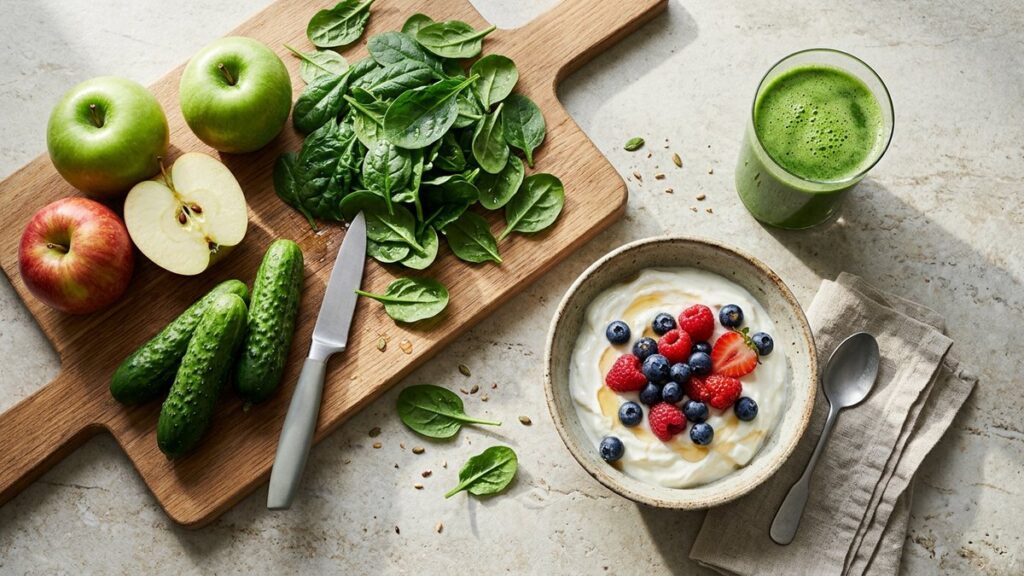
The blends included green juices made mostly from apple, cucumber, celery and romaine, a beet and apple juice, a citrus juice, lemon-cayenne water and an almond and date drink. Together they supplied about 1,310 calories a day.
A calorie cut like this makes your body draw on its stored carbohydrate. According to a classic paper on glycogen and early diet weight loss, your liver and muscles store glycogen bound to three to four parts water.
That water-heavy glycogen helps explain the quick weight swings early in a very low-calorie diet. The same paper warns of exaggerated regain when people load up on carbohydrate afterward.
This helps explain why the scale can drop a few pounds in 3 days and climb back afterward. A 2017 review cited by NCCIH found that juicing and detox diets can cause initial weight loss because people eat so few calories. But these diets tend to lead to weight gain once people go back to a normal diet.
Day 1–3: what to expect on a 3-day juice cleanse
| Day | What you may notice | Why it happens |
|---|---|---|
| Day 1 | Hunger and a first drop on the scale | Calories fall sharply, so your body starts using stored glycogen and releases the water bound to it |
| Day 2 | Headache, weakness or low energy; loose stools if the program includes laxatives | NCCIH notes that fasting programs, which very low-calorie cleanses resemble, can cause headaches, weakness and dehydration, and that laxatives in some cleanses can cause diarrhea |
| Day 3 | The scale may read lowest at the end of the cleanse; some people feel lightheaded | More glycogen and water loss. NCCIH lists fainting and dehydration among the possible effects of fasting programs |
| Days 4–7 (eating again) | The scale climbs back up, sometimes quickly | Glycogen and its water refill, especially after a high-carb meal |
| Two weeks later | Part of the loss may remain | In the UCLA study, people were 0.9 kg below baseline at 2 weeks, about half of the 1.7 kg they lost during the cleanse |
Does a juice cleanse for weight loss work?
Only in the short term, and only on the scale. The UCLA study is one of very few in people, and it was small and short. It reported results for 20 healthy adults (25 enrolled) who normally ate fewer than three servings of fruit and vegetables a day, and it followed them for just 2 weeks after the cleanse.
The NCCIH fact sheet on detoxes and cleanses sums up the wider evidence. The few human studies are low quality, with design problems, few participants or no peer review.
The fact sheet cites a 2015 review that found no compelling research to support detox diets for weight management. No studies have looked at long-term effects.
In short, much of the quick drop from a detox cleanse is water, and it tends not to last. If your goal is lasting fat loss, a cleanse does not help you build the habits that keep weight off. Our guide to juicing for weight loss covers how juice can fit into a normal eating plan instead.
Juice cleanse benefits and detox claims
Detox claims have the least support of all. NCCIH cites a 2015 review that found no compelling research showing detox diets eliminate toxins from the body. The FDA and the Federal Trade Commission have taken action against companies selling detox and cleansing products that contained hidden ingredients or made false claims about treating serious diseases.
The UCLA study did find short-term changes in gut bacteria and a rise in nitric oxide, a compound that helps blood vessels relax. The gut changes were already partly reversed 2 weeks later, and a 20-person study this short cannot show whether they matter for health.
Juice cleanse side effects and risks
Kidney damage from oxalate
Leafy greens and beets are high in oxalate, a natural compound. NCCIH advises people prone to kidney stones to limit high-oxalate foods. The authors of the case below say oxalate-rich juice cleanses increase how much oxalate the body absorbs, which can injure the kidneys in people with risk factors.
Doctors have reported a case of acute oxalate kidney injury after a “green smoothie cleanse”. A 65-year-old woman with normal kidney function drank juice made from oxalate-rich leafy greens and fruit. Her kidneys failed and did not recover, leaving her with end-stage kidney disease.
She had a past gastric bypass and had recently taken a long course of antibiotics. The authors name chronic kidney disease, gastric bypass and antibiotic use as risk factors.
Blood sugar problems if you have diabetes
NCCIH advises people with diabetes to talk with their health care team before making major changes to how they eat. A cleanse is a major change. The National Institute of Diabetes and Digestive and Kidney Diseases warns that insulin, sulfonylureas and meglitinides can push blood sugar too low if you skip meals, eat too few carbohydrates or keep taking these medicines while fasting.
Germs in unpasteurized juice
Juice that has not been pasteurized or treated another way to kill bacteria can make people sick, NCCIH warns. The illness can be serious in children, older adults and people with weakened immune systems.
The HHS Office on Women’s Health tells pregnant women not to drink unpasteurized milk or juices. Read the label, and if it does not say the juice was pasteurized or treated, skip it if you are pregnant or in one of the groups above.
Dehydration, electrolyte problems and missing nutrients
Some cleanses bundle laxatives, enemas or colon cleansing. NCCIH says acute diarrhea from laxatives can lead to dehydration, and that days of drinking large amounts of water and herbal tea without food can cause dangerous electrolyte imbalances. Diets that severely restrict calories or food types usually do not lead to lasting weight loss and may not supply all the nutrients you need.
Who should never do a juice cleanse
- Pregnant or breastfeeding women. Unpasteurized juice is off the list in pregnancy, and the Dietary Guidelines for Americans, 2025–2030 note that pregnancy raises nutrient needs and breastfeeding raises both energy and nutrient needs.
- People with kidney disease or a history of kidney stones, and anyone with a past gastric bypass or a recent long course of antibiotics, because of the oxalate risk.
- People with diabetes who take insulin, a sulfonylurea or a meglitinide, unless their care team plans the change with them.
- Children, older adults and anyone with a weakened immune system, if the juice is unpasteurized.
- People with digestive disease, past colon surgery, severe hemorrhoids, kidney disease or heart disease if the cleanse includes colon cleansing. NCCIH says harmful effects are more likely in these groups.
- Anyone with a past or current eating disorder. Talk with your care team instead of starting a restrictive plan.
A safer one-day reset with protein
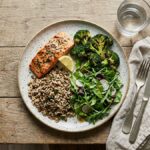
If you want a lighter day after a holiday or a trip, eat whole foods instead of drinking only juice. The Dietary Guidelines advise eating vegetables and fruits whole, in their original form, and having 100% juice only in limited portions or diluted with water. They also set a protein goal of 1.2 to 1.6 grams per kilogram of body weight a day, adjusted to your calorie needs.
This sample day keeps produce front and center and adds about 80 grams of protein. Protein values come from Harvard Health’s table of USDA values and do not count the small amounts in fruit and vegetables.
| Meal | What to eat | Protein |
|---|---|---|
| Breakfast | Smoothie made with 1 cup milk, 6 oz plain Greek yogurt, frozen berries and a handful of spinach | 8 g + 17 g = 25 g |
| Lunch | Vegetable soup with ½ cup beans, plus 3 oz cooked chicken or turkey | 8 g + 19 g = 27 g |
| Snack | An orange or apple with ¼ cup nuts | 7 g |
| Dinner | 3 oz baked salmon or trout, a large plate of roasted vegetables and a green salad | 21 g |
| Drinks | Water, unsweetened tea or cucumber water; a small glass of juice with a meal, or juice mixed with water | — |
| Total | About 80 g |
For more ideas, try our smoothies for weight loss, a vegetable-heavy recipe from our weight loss juice recipes or a pitcher of cucumber water. You can find more structured plans in our diet plans section.
Frequently asked questions
How much weight can you lose on a 3-day juice cleanse?
In the UCLA study, healthy adults lost an average of 1.7 kg, about 3.7 pounds, over 3 days. Part of a quick drop like this is glycogen and the water stored with it. Two weeks later, the group was 0.9 kg, about 2 pounds, below its starting weight.
Do juice cleanses remove toxins?
There is no good evidence that they do. NCCIH reports that a 2015 review found no compelling research supporting detox diets for removing toxins or managing weight. Regulators have acted against some detox products for hidden ingredients and false claims.
Are juice cleanses bad for your kidneys?
They can be for some people. Juices made from leafy greens and beets are high in oxalate, and doctors have reported kidney failure after a green juice cleanse in a woman with risk factors. If you have kidney disease, kidney stones or a past gastric bypass, avoid cleanses unless your doctor approves.
Can a juice cleanse reset your gut?
Not in any lasting way that has been shown. In the UCLA study, gut bacteria shifted after 3 days of juice, but the changes were already partly reversed 2 weeks later. The study had only 20 people and could not show whether the shift affects health.
What should I eat after a juice cleanse?
Go back to regular meals built around protein, vegetables, fruit and whole grains. Expect the scale to rise a little as your glycogen and its water refill. Much of that rebound is water, not fat, so do not fight it with another cleanse.
Sources
- “Detoxes” and “Cleanses”: What You Need To Know. National Center for Complementary and Integrative Health (NIH)
- Henning SM, et al. Health benefit of vegetable/fruit juice-based diet: role of microbiome. Scientific Reports, 2017 (PubMed Central)
- Kreitzman SN, et al. Glycogen storage: illusions of easy weight loss, excessive weight regain, and distortions in estimates of body composition. American Journal of Clinical Nutrition, 1992
- Makkapati S, et al. “Green smoothie cleanse” causing acute oxalate nephropathy. American Journal of Kidney Diseases, 2018
- Low Blood Glucose (Hypoglycemia). National Institute of Diabetes and Digestive and Kidney Diseases
- Staying healthy and safe during pregnancy. HHS Office on Women’s Health
- Dietary Guidelines for Americans, 2025–2030. U.S. Department of Agriculture and U.S. Department of Health and Human Services
- How much protein do you need every day? Harvard Health Publishing